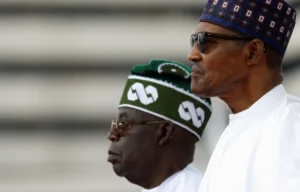
Nyesom Wike has remained in PDP in name, but as Minister of FCT his influence now leans towards APC interests in the Tinubu administration. Observers note his role as “a mission to destroy PDP,” with allegations that President Tinubu is supporting Wike’s destabilizing activities from within, which may soon necessitate a formal transition to the ruling party if he’s to maintain political footing as Tinubu’s allies consolidate power.
By KS George
Political defections in Nigeria—such as those involving Atiku Abubakar, Peter Obi, Ayo Fayose, and Rotimi Amaechi—are a persistent feature and result from the quest to consolidate political positions, deflect enemies, and secure political peace. The motivations often center on personal ambition, survival, intra-party conflicts, lack of internal democracy, and absence of strong ideological alignment within parties. These transitions are not tied only to election cycles, but are deeply connected to the pursuit and maintenance of power.
Ayo Fayose transitioned between PDP and Labour Party, at one point funding Labour Party in Ekiti before returning to PDP in 2011, enabling him to manage adversaries and secure his 2014 gubernatorial victory. Most recently, his former deputy led another wave of defections, demonstrating the fluidity of political allegiances in Ekiti State.
Rotimi Amaechi defected from PDP to APC during his final term to ensure political survival amid intra-party disputes. His move was part of a broader wave of defections known as the “G-5,” with legal precedents supporting such transitions when politicians feel excluded or unfairly treated within party systems. His assembly members also joined him en masse in switching allegiance.
Peter Obi started in APGA, switched to PDP during Jonathan’s tenure for rapprochement, and further moved to Labour Party for “political survival” in 2023, after being denied the PDP presidential ticket. Recently, he has teamed with ADC as part of an opposition coalition, illustrating the continued importance of strategic positioning in response to shifting party fortunes.
Nyesom Wike has remained in PDP in name, but as Minister of FCT his influence now leans towards APC interests in the Tinubu administration. Observers note his role as “a mission to destroy PDP,” with allegations that President Tinubu is supporting Wike’s destabilizing activities from within, which may soon necessitate a formal transition to the ruling party if he’s to maintain political footing as Tinubu’s allies consolidate power.
Recent events: Last week, Peter Mbah (Enugu) and Douye Diri (Bayelsa), both governors, resigned from PDP and defected to APC, reducing PDP’s hold to only eight governors nationwide. This continuing pattern is seen by many as evidence of the transactional nature of Nigerian politics: politicians defect when strategic opportunities arise, political enemies close in, or survival necessitates new allegiances.
In sum, Nigeria’s political marketplace is shaped by prevalent defections, maneuvers for consolidation, and shifting allegiances—often more about survival and access to power than the pursuit of ideological goals.
KS George wrote in from Port Harcourt, Rivers State
About The Author