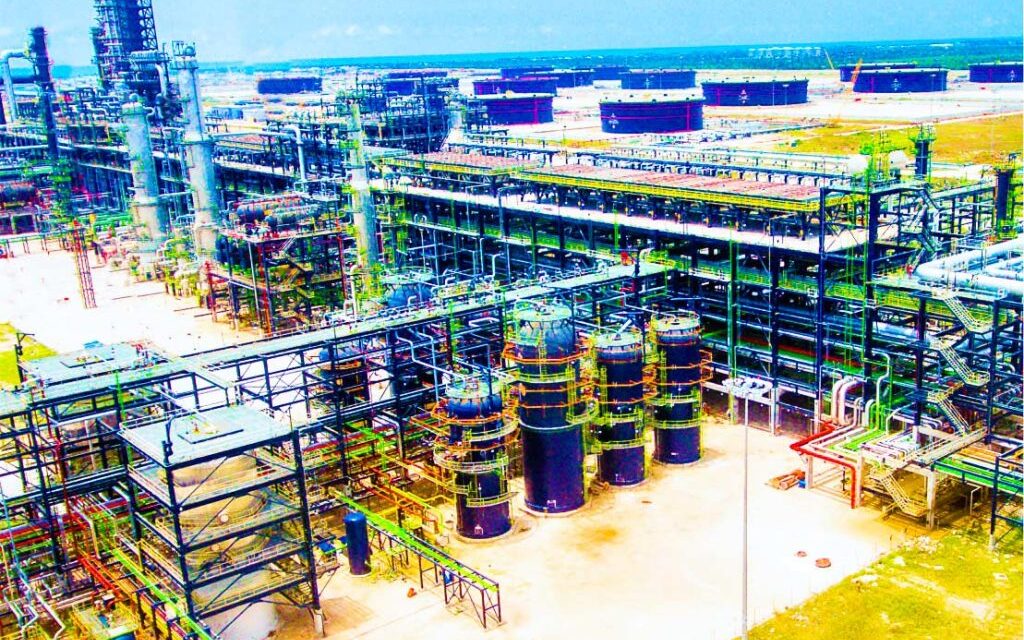
Threats to maritime movement in the Strait of Hormuz narrowed fuel supply chains and forced aviation fuel buyers to seek alternative suppliers outside the Middle East.
By Ola Kay
According to S&P Global Commodities at Sea data, Dangote Petroleum Refinery has became the world’s largest exporter of jet fuel as of April 2026, following instabilities to global fuel supply chains occasioned by conflict in the Middle East and uncertainty around the Strait of Hormuz.
The war in the Middle East badly affected one of the world’s most important energy corridors, paving the way for a refinery on Nigeria’s Atlantic coast to emerge as one of the biggest beneficiaries.
Upon the attainment of this milestone, refinery executives say the company is expanding beyond domestic fuel production into international crude and refined products trading.
Business Insider Africa has reported that the development highlights Nigeria’s growing role in global energy markets as Dangote pursues plans to double production capacity and expand across Africa.
For industry players in the oil and gas sector, the feat also underscores the growing influence of Africa’s largest refinery in global fuel markets and highlights how geopolitical disruptions are reshaping long-established trade routes across the energy sector.
In a recent S&P Global Energy report, Dangote Refinery Chief Executive Officer David Bird said the company transformed its operations into what he described as “max jet mode” after conflict involving Iran, Israel and the United States foisted unsettled fuel flows through the Middle East region.
Another report cited by Business Insider Africa quoted S&P Global Commodities at Sea data as saying that, “After the Middle East war began, Dangote shifted to ‘max jet mode,’ and in April it became the world’s single largest exporter of aviation fuel.”
The potential was realized as the 650,000-barrel-per-day refinery reaches full production capacity following a gradual ramp-up period. The facility has maintained near-peak output while using a flexible blending system that incorporates feedstocks such as gas-to-liquids naphtha and Bonny condensate to maximise fuel production.
The Dangote Refinery’s peak production also came about with increasing uncertainty around the Strait of Hormuz, ( a strategic shipping route) through which roughly one-fifth of global oil and fuel supplies pass.
Ship movement in the Strait of Hormuz narrowed fuel supply chains and forced aviation fuel buyers to seek alternative suppliers outside the Middle East.
That shift created an opportunity for Dangote Refinery, which rapidly increased jet fuel exports as global demand for non-Middle Eastern supply sources grew.
Operators of the refinery say its vision is beyond taking advantage of a temporary market disruptions.
About The Author