The first step toward inner victory is honesty. It is easy to blame every struggle on external forces while ignoring our own patterns, desires, weaknesses, and reactions. But Jesus teaches in Luke 9:23–24 that anyone who desires to follow Him must deny himself, take up his cross daily, and follow Him.
By Bamidele Oloruntoba
When people speak about the battles they face in life, the conversation often begins with what is happening around them. They point to people, pressure, delay, lack, disappointment, temptation, or difficult circumstances. These external factors are real, and their impact should not be dismissed. Yet there is a deeper truth worth considering: many victories do not begin outside us; they begin within us.
The inward life matters because the heart is the place from which many outward issues flow. Proverbs 4:23 reminds us to guard the heart diligently because the issues of life proceed from it. Jesus also taught in Mark 7:20–23 that what comes from within a person can affect and defile outward behaviour. This means that while external pressures may be present, the condition of the inner life often determines how we respond to them.
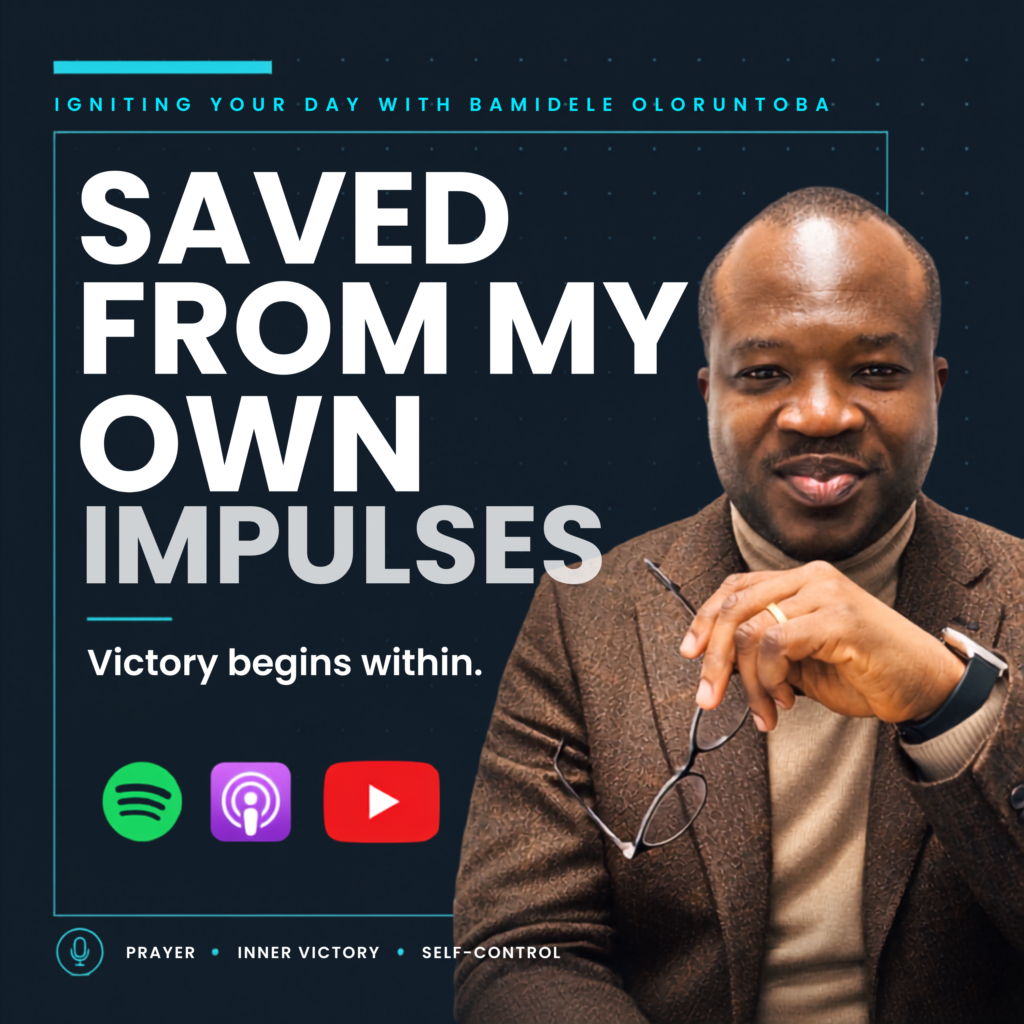
This is where the message, “Saved from My Own Impulses,” becomes important. Sometimes, before God changes what is around us, He first delivers us from what is driving us.
Admit You Have a Cross to Carry
The first step toward inner victory is honesty. It is easy to blame every struggle on external forces while ignoring our own patterns, desires, weaknesses, and reactions. But Jesus teaches in Luke 9:23–24 that anyone who desires to follow Him must deny himself, take up his cross daily, and follow Him.
This is not merely a call to religious devotion. It is a call to spiritual responsibility. There are desires to deny, habits to confront, appetites to discipline, and pressures to resist. Many struggles continue because we have not learned to say no to ourselves.
Inner victory often begins with the admission: “I have a cross to carry, and only Jesus can save me.”
Say No to Panic
Panic is one of the most dangerous drivers of poor decisions. It pushes people to act before they have clarity. It makes opportunities feel like emergencies. It creates the impression that if something is not done immediately, everything will be lost.
Psalm 46:10–11 calls us to be still and know that God is God. That stillness is not laziness or passivity. It is a posture of trust. It is the refusal to let fear, pressure, or urgency become the lord of one’s decisions.
When a person is truly persuaded that the Lord of hosts is with them, panic loses its authority. Stillness becomes a weapon against rushed, fear-driven choices.
Become Untriggerable by Fleshly Desires
Galatians 2:20 speaks of being crucified with Christ, so that the old self no longer rules and Christ lives within. This truth has practical implications. If the old self has been crucified, then the believer is no longer meant to be easily triggered by the same desires, provocations, and impulses that once controlled them.
To become untriggerable by fleshly desires is not to pretend that temptation does not exist. It is to recognise that the old version of self no longer has the right to rule. The believer’s life is now governed by Christ.
What dies with Christ should not continue to rule us.
Recover Your Body
The battle against impulse is not only fought in the mind; it is also expressed through the body. Romans 6:11–13 teaches that the body should not be presented as an instrument of unrighteousness, but as an instrument of righteousness to God.
This applies to anger, lust, fear, uncontrolled speech, harmful habits, and every bodily expression that has been surrendered to impulse. The body must be recovered and yielded back to God.
Romans 12:1 continues this thought by calling believers to present their bodies as living sacrifices. Recovery is not complete until surrender follows. The goal is not merely to regain control, but to offer the whole self to God.
Tell God to Hide You
There are times when human discipline is not enough. There are weaknesses we are still learning to overcome, pressures we are not yet mature enough to manage, and temptations we should not face without divine help.
That is why the prayer, “Lord, hide me,” is necessary.
Psalm 91:4 speaks of finding refuge under God’s wings. Matthew 6:13 teaches us to pray that we are not led into temptation but delivered from evil. Colossians 3:3 reminds believers that their lives are hidden with Christ in God
To ask God to hide us is to ask for covering, refuge, preservation, and divine protection from the impulses and pressures that could overwhelm us.
The Real Battle Beneath the Battle
Many people are praying for their circumstances to change. That prayer is valid. But there is another prayer that may be even more urgent: “Lord, change what is driving me.”
If panic is driving us, we need stillness. If fleshly desire is driving us, we need crucifixion with Christ. If anger is driving us, we need to recover our body. If weakness is exposing us, we need God to hide us. If self is ruling us, we need the cross.
The good news is that God does not expose the inward parts to condemn us. He shines His light within us to deliver us.
Victory begins inwardly. And when God saves a person from their own impulses, they are better positioned to face the pressures around them with wisdom, peace, obedience, and spiritual strength.
About The Author