With Bunmi Alli-Balogun oallibalogun@outlook.com
Henry Brown

In 1849, Henry “Box” Brown undertook one of the most daring escapes from slavery in American history. To flee from 33 years of enslavement in Richmond, Virginia, Brown shipped himself in a cargo box to freedom in Philadelphia, located in the abolitionist North. The box measured a mere 60 centimeters wide, offering Brown barely enough room to crouch, let alone move comfortably.
Brown meticulously planned his escape with the assistance of sympathetic allies. He endured the arduous 350-mile journey, crouched in the confined space, with very limited air supply from the few holes he had punctured in the box. He had little more than some water and a small amount of food to sustain him during the transit. Despite the uncomfortable and dangerous conditions, Brown’s determination carried him through.
The journey took approximately 27 hours. His survival and subsequent liberation upon arrival in Philadelphia culminated in Brown emerging from the box and declaring, “How do you do, gentlemen!” His successful escape garnered widespread attention and he became a symbol of the abolitionist movement.
Following the escape, Henry Brown spent the remainder of his life as a free man—around 50 years—sharing his story and advocating for the abolition of slavery. He utilized his experience to highlight the cruelty of slavery and inspired many with his audacity and unyielding quest for freedom.
A Jewish Family Story
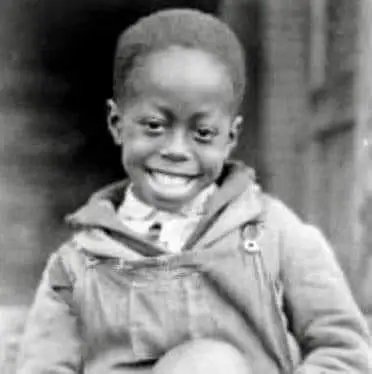
A Jewish family named Karnofsky, who immigrated from Lithuania to the United States, took pity on the 7-year-old boy and brought him to their home.
There he stayed and spent the night in this Jewish family home, where for the first time in his life he was treated with kindness and tenderness.
When he went to bed, Mrs. Karnofski sang him Russian lullabies, which he sang with her.
Later he learned to sing and play several Russian and Jewish songs.
Over time, this boy became the adopted son of this family.
Mr. Karnofsky gave him money to buy his first musical instrument, as was the custom in Jewish families.
Later, when he became a professional musician and composer, he used these Jewish melodies in compositions such as St. James’s Hospital and Go Down Moses.
The little boy grew up and wrote a book about this Jewish family, who adopted him in 1907.
In memory of this family and until the end of his life, he wore the Star of David and said that in this family he learned “how to live a real life and self-determination.”
This little boy’s name was Louis Armstrong. This little boy was called Louis “Satchmo” Armstrong. Louis Armstrong proudly spoke fluent Yiddish and “Satchmo” is Yiddish for “big cheeks, a nickname some say was given to him by Mrs. Karnofsky!
Now you know rest of the story!
About The Author