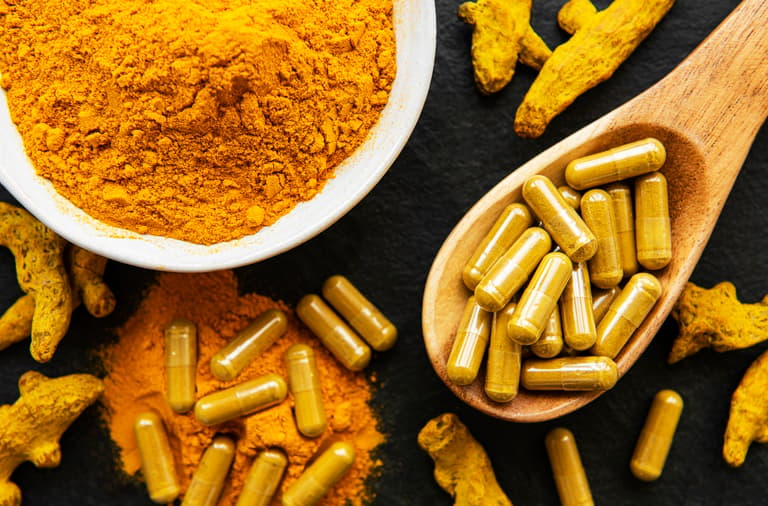
More than 15 million Americans may be putting their liver health at risk, simply by trying to better their overall health. New research has revealed the extent of the damage being caused by taking popular botanical supplements including turmeric, green tea, the stress-relieving ashwagandha and weight-loss aid Garcinia cambogia.
Health researchers from the University of Michigan, Ann Arbor, looked at data from 2017 to 2021, covering 9,685 people, and found that nearly 4.7% of US adults had used one of the six potentially toxic supplements within the previous 30 days. Those supplements were turmeric, green tea, ashwagandha, G. cambogia, black cohosh and red yeast rice.
Supplement users were mostly taking these botanicals of their own accord, not due to medical directives, for a range of issues: turmeric for joint health and arthritis, green tea to boost energy levels, G. cambogia for weight loss, black cohosh to manage hot flushes and red yeast rice for heart health.
And while news of liver toxicity connected to these supplements is not new, having been reported to be on the rise for some time now, including in this 2022 study, medical researchers are concerned that people are unaware that they come with a serious risk of overdose that results in emergency department presentations. Hospitalizations increased from 7% to 20% over the decade between 2004 and 2014.
“Use of herbal and dietary supplements (HDSs) accounts for an increasing proportion of drug hepatotoxicity cases,” said the researchers, led by Alisa Likhitsup, an assistant professor of gastroenterology.
Drug-induced hepatotoxicity is an acute or chronic liver injury also known as toxic liver disease, with a host of symptoms including yellowing of the skin, fatigue, nausea, rash, itching and upper-right abdominal pain. While it can be treated by removing the toxic trigger, it can lead to serious consequences, including the patient needing a liver transplant or even dying from it if it is untreated or missed.
While hospitalizations due to misuse of herbal supplements are on the rise, the researchers are not campaigning for abstinence, but for users to be vigilant with ingredients and dosages, especially if they’re taking a combination of them or other medicines to treat chronic conditions.
“The safety and efficacy of HDSs are not well established due to the lack of regulatory requirements by the US Food and Drug Administration for human pharmacokinetic or prospective clinical trials prior to marketing,” the researchers added.
In 2023, the Australian FDA equivalent, the Therapeutic Goods Association (TGA), issued a warning that highlighted the risk of liver injury from consuming turmeric and/or curcumin. While they cautioned that serious injury is rare, the risk varied depending on an individual’s bioabsorption and liver health.
“The risk of liver injury does not appear to relate to Curcuma longa (turmeric) when consumed in typical dietary amounts as a food,” the TGA added, offering a pinch of good news for those who cook with the popular orange spice.
- New Atlas
About The Author