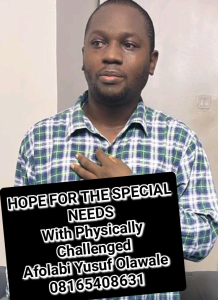
By Afolabi Yusuf Olawale
In the hearts of many, there resides a quiet ache, a yearning for a reality that diverges from their own. This longing, often experienced by those traversing the landscape of disability, emerges as a persistent desire for a world free of limitations, where bodies move unencumbered and pain is but a distant memory. It is this yearning that compels some to seek answers in the supernatural, to pursue unorthodox remedies in the sanctuaries of spiritual healers, such as native doctors, also known as baba lawos, in hopes of escaping the confines of their lived experience.
This longing is entirely understandable. Confronting disability can feel like gazing into a mirror and seeing a stranger, a reflection of a life that has been irrevocably altered. The urge to flee, to escape this unfamiliar self, is compelling. It is easy to see why the promise of a paranormal miracle, a sudden and transformative change, becomes a beacon of hope.
But let us be honest: the pursuit of such quick fixes can be perilous. It is a game of denial, a way of concealing the truths of our bodies and minds, seeking validation from unearthly sources rather than introspection. This path often leads us down winding roads, paved with disillusionment and heartbreak, distancing us further from acceptance and understanding.
Imagine this: you are presented with a map, a detailed guide to a path leading to a treasure you deeply desire. Yet, rather than following the map, you choose to wander through the wilderness, pursuing every glimmer of hope and every whispered rumor of a shortcut, only to find yourself lost and exhausted, further from your goal.
This is the peril of pursuing supernatural wonders. The truth is, the treasure we seek—the acceptance and peace we long for—lies not in the mystical or the miraculous, but within ourselves. It resides in facing the mirror, not with fear or denial, but with courage and curiosity. It lies in understanding that our disabilities are not a curse, but a part of who we are, shaping our experiences and fueling our resilience.
This isn’t about denying the pain or the challenges. It’s about acknowledging them, accepting them as part of the journey, and focusing our energy on overcoming limitations—not by seeking magical solutions, but by embracing the process of growth and adaptation.
There is no shame in needing support, in requiring tools and resources to navigate the world in our own way. Nor is there shame in seeking guidance from professionals who understand the complexities of living with a disability. The miracle we seek lies not in a sudden transformation, but in the consistent effort to build a life of meaning and purpose, a life that honors our strengths and embraces our challenges.
Let us abandon the quest for miracles and instead turn towards the mirror, towards the truth of our own stories. Let us embrace the tools of acceptance, resilience, and adaptation. Let us walk the path of self-discovery, not in search of an otherworldly escape, but in pursuit of a life lived authentically, a life that embraces our whole selves, disabilities and all.
About The Author