
60 percent of girls are out of school- report.
By Fatimah Idera
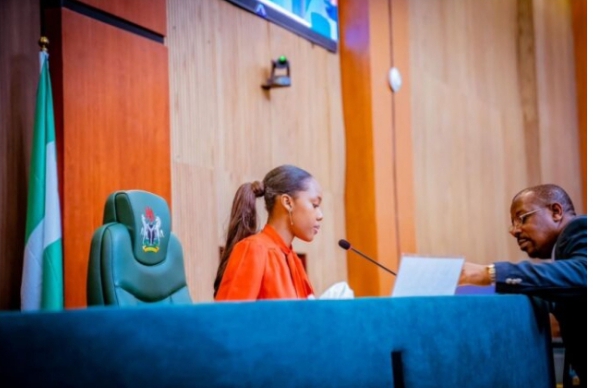
Isabel Anani, a 16-year-old gender advocate, has presided over the plenary of the House of Representatives.
Speaker of the House, Tajudeen Abbas, paved the way for Anani to preside over proceedings of the green chamber for about 20 minutes in commemoration of the 2024 International Day of the Girl Child.
In a statement via X, Abbas described the session as unprecedented.
“Today, history was made on the floor of the House of Representatives when I symbolically allowed a 16-year-old advocate, Ms. Isabel Anani, to preside over the plenary session, enabling her to conduct the session, the first of its kind in the history of the House of Representatives.”
“It is part of the celebration for this year’s International Day for the Girl Child. Women’s inclusion and participation in governance is at the heart of the 10th House Legislative Agenda.
“As a pioneering voice on Nigeria’s Technical Working Group for Adolescent Health and Wellbeing and UNICEF Young Influencer, Isabel’s passion ignites positive change. Selected through a rigorous nationwide search, Isabel’s leadership exemplifies the power of youth,” the Speaker posted.
Abbas said Anani’s “remarkable journey will undoubtedly inspire” her peers and younger ones.
He added by saying, “Let us recognise Isabel’s achievements and celebrate the unwavering spirit of Nigerian girls who courageously pursue their dreams despite adversity.”
Isabel Anani who presided over the plenary of the house of representatives is a 16-year-old gender advocate
Development Diaries reports that the theme of this year’s International Day of the Girl Child 2024 is ‘Girls’ Vision for the Future’.
It acknowledged that, “Despite progress in some areas, the Nigerian girl child continues to face numerous barriers to her well-being and future.
“These challenges include limited access to quality education, early marriage, gender-based violence, and harmful cultural practices that hinder her potential.
“Millions of children in Nigeria, 60 percent of whom are girls, are out of school. This stark figure reveals the disparity and highlights the urgent need for interventions that prioritise the girl child in education and beyond.”
About The Author







