Chidera Prisca Nwokeukwu, Anambra
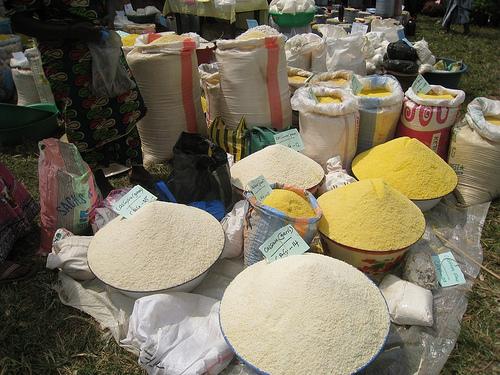
As at June 29, 2024, the price of garri, a common staple in most part of Nigeria, especially in Eastern part has skyrocketed beyond the reach of an average Nigerian. Garri, which years ago, was seen as an option for the indigent, has now gone beyond the reach of the poor. This alarming trend is causing significant concern among residents of Awka, the Anambra State capital, even as The Pinnacle Times conducted a survey to ascertain current reality.
One of the residents, Martha Igwebuike, who just returned from market as at the time of the this report, shared her surprise at the market. “I was shocked when I spent ₦8,000 on just two painters of garri ( Custard bucket measure) this morning. The last time I bought garri, it was ₦2,400 for two painters.
“I have been eating almost a bag of garri produced by my mother in the village for almost eight months now with my family. I didn’t understand what people were saying until I went to the market to buy common garri.”
Stella Egooyibo in like manner shared her distress over the high cost of the commodity item, “Garri, which used to be the commonest food and a quick means of survival, is now food for the rich. The price of a painter of garri has doubled in just a few months.
“I don’t know how we, the average Nigerians, will survive if this continues. It is already becoming unbearable. I wish the government would do something urgently to alleviate our sufferings.
Another resident, Ebele Dike, echoed deep feelings of dissatisfaction when she said: “I can’t afford to waste even a handful of garri now because it is now priced like gold. The cost of a cup of garri has tripled, yet our incomes are not increasing.
“The government needs to address this as prices of food items skyrocket in this country. I pray we don’t get to a time hunger will begin to kill people. Are we even sure this is not already happening?” He queried rhetorically.
For Ifeanyi Chukwu, any family that still maintains its previous consumption level must be very rich in the Nigeria of today. “Garri is no longer food for the poor. A painter that used to cost ₦1,200 now sells for ₦3,500 to ₦4,000, as for the white garri. How many poor Nigerian households can afford that? No one knows what the price will be tomorrow. We are in God’s hands in this country.”
For Francis Anaenechukwu who has closely followed the historical trends in the prices of garri in the state the shocking experience is not going to be different as she went the memory lane saying, “There was a time it was sold for ₦450 a painter It rose to ₦1,200 and then to ₦2,000.
“It is now ₦4,000. I am becoming hopeless in this country if garri, which is locally produced, continues to increase in price with no hope of decrease in price.”
Apart from garri, costs of foodstuffs keep going up every day. I fear for the average Nigerian because it is not easy being a Nigerian currently.
Some of the respondents strongly advised fellow citizens across different regions of Nigeria to go back to farm as the only means of survival. Anaenechukwu advocated agriculture revolution, by emphasizing particularly that, “I am going back to farming immediately because I don’t think this price is coming down soon or ever.”
His position was supported by Igwebuike who observed that, “The only solution is for people to take agriculture seriously. We can’t keep buying everything we eat and expect things to come down.”
The respondents were unanimous in their appeal to the government to strive towards addressing the precarious economic situation in the country to give the suffering citizens a sigh of relief.
About The Author