By Olawale Lamina
(Publisher/Editor-in-chief )
Moved by no reason other than the patriotic zeal to effectively tackle the menace of corruption in its layered dimensions, the Independent Corrupt Practices and Other Related Offences Commission ICPC, expanded the scope of its search for solutions to Nigeria’s perennial challenge and decided to take the anti-graft efforts a notch higher when it convened the Maiden Edition of the International Diplomatic Dialogue, on Tuesday June 9, 2026 ( exactly a week ago) with the theme “Experience Sharing in Anti-Corruption Strategy: The Kenyan Perspective.”


The initiative was at the instance of the research and training arm of the ICPC- Anti-Corruption Academy of Nigeria, (ACAN), headed by the Provost, Professor Sheriff Ghali Ibrahim. This was in recognition of the dynamic nature of systemic corruption and a curious search for strategies to put the scourge at bay, that the ICPC had accommodated a novel idea such as this among its many well intentioned programmes.
The venue was ICPC Main Auditorium, which was full to capacity based the sheer importance of the dialogue that will lead others in unraveling the myth of corruption in Nigeria.
Setting the tone for a discourse that would shape the brainstorming session at comparing notes across geography with Kenya being the first port of call, the ICPC Chairman and Chief Host, Dr. Aliyu Adamu SAN, in his Keynote Address asserted that:
“Corruption remains a major impediment to sustainable development, economic growth, social justice, and public trust in institutions.”
That in itself encapsulates the crux of the matter, as far as the the question of corruption is concerned and its attendant consequences on integrity, national reputation and development, among other critical elements to consider.
Perhaps, the choice of Kenya coming first in the series of dialogues to follow was not far fetched, just like the ICPC boss had argued that the country which fell among the Horn of Africa had made remarkable efforts in advancing anti-corruption reforms and, so Nigeria had lessons to learn from the Kenyan example.
And so, the keynote speaker, Dr. Adamu, Nigeria’s Anti-Corruption Czar said:
“As Nigeria continues to deepen its anti-corruption efforts, there is much value in learning from comparative experiences, understanding best practices, and identifying innovative approaches that can be adapted to our local realities.”
According to Dr. Aliyu, the instituted dialogue signals both the ICPC’s and ACAN’s commitment to promote international cooperation and deepen what he described as evidence-based approaches to corruption prevention in Africa’s most populous nation.
Certainly, the moment clearly underscored the priority placed on war against corrupt practices in Nigeria, as the ICPC Chairman was quick to observe that the scourge would continue to produce devastating consequences on the political, socio-economic, and developmental strides of nations if unchecked. He also pointed out that the initiative didn’t develop our of the blues but aligned with the anti-graft agency’s broader objective of building a culture of integrity, transparency, and accountability in the public and private sectors.
For aligning with the mission of the Commission, the ICPC chairman commended the ACAN Provost, Prof. Sheriff Ibrahim and his team for initiating and organising the conversation around the subject of corruption.
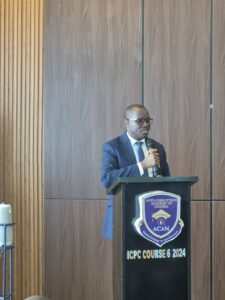
And the moment for comparing notes, identifying common threats and appreciating what works as example for Nigeria to copy came with the Guest Speaker, His Excellency, Ambassador Isaac Keen Parashina, MBS, the Kenya High Commissioner to Nigeria, putting his perspectives across to a cross section of stakeholders by noting that Kenya’s anti-corruption trajectories demonstrated that sustainable progress is anchored upon constitutional commitment, strong institutions, effective legislation, technological innovation and coordinated action across tiers of government.
In his lecture titled, “Diplomatic Dialogue: How Kenya Handles Corruption and Anti-Corruption,” the diplomat summed up the fact that African nations had the capacity, expertise and determination to combat corruption.
Earlier, the Kenya’s High Commissioner noted that the subject of discussion was at the heart of shared ties and connection between Nigeria and his home country, apart from being separated by geography, he said that both nations shared a lot of ideals.
He observe that the African continent has a lot in common, because of their similar and comparative challenges without the need to look for solution outside.
He identified Corruption as a national security concern and a government issue as it affects the social contract between the government and the citizens.
The diplomat stressed the need for institutional coordination despite challenges and also the need to harness opportunities for collaboration between the two countries
According to the Guest Speaker, corruption offences were criminalized in his home country with experiences of high profile scandals bringing international pressures for reforms accordingly.
Comparing notes further and identifying common threats and appreciating what works as example for Nigeria to copy, Ambassador Parashina explained that, “The Constitution of Kenya, 2010 fundamentally transformed the country’s anti-corruption landscape by embedding integrity, transparency and accountability into the governance framework and strengthening independent oversight institutions.
“While challenges persist, Kenya continues to refine its systems and strengthen its institutions in pursuit of accountable governance and sustainable development.
“The experiences of Kenya and Nigeria affirm that African nations possess the capacity, expertise and determination necessary to confront corruption and promote integrity in public life.”
In the spirit of shared comment, the Kenyan Ambassador recommended that through deeper cooperation, the two countries can contribute meaningfully towards achieving a corruption-free good governance, economic growth and prosperity across the continent.
He also delved into the historical moment initiatives and framework were put in place to address corruption wholistically in Kenya, with first attempt being made as anti-corruption commission was established without constitutional powers until 2003 brought new initiative even with the need for deeper reforms.
He said that 2010 brought about a turning point for the country with legal reforms that accommodated chapters for integrity, accountability in the fight against corruption. He gave an instance where part of the constitution required the public officers to display integrity and accountability, including the political class who were subjected to checks that paved the way for accountability in public office. He added that Kenya established ethics and anti-corruption commission similar to the Nigeria’s experience.
On possible common challenges confronting both countries, the ambassador stated that today, asset declarations by public office holders are still not honest, including public procurement act, where procurement processes are being circumvented despite efforts put in place so far.
He said that thankfully, Kenya’s anti- money laundering act gave room for asset freezing, thereby deepening the fight against corruption.
On institutional architecture, the High Commissioner informed that the country has in place a collaborative multi-agency framework led by the Financial Reporting Centre (FRC) and the Ethics and Anti-Corruption Commission (EACC), where prosecution of corrupt and economic crimes and misuse of public funds are investigated. Likewise, he shared further details that assets recovery agency saddled with recovery of assets and financial reporting- a body giving information about suspicious financial dealings are all in place towards fighting multilayered corruption in the country, while, according to him, the Judiciary tries corruption related matters, with the parliament (comprising members of the legislature) playing their oversight roles.
His Excellency Ambassador Parashina emphasized that Kenya’s multi-agency approach pointed to the fact that the issues around corruption are complex. But progressively anti-Corruption institutions in Kenya have been strengthened for better performance.
Other concrete efforts being put in place, according to the diplomat included the fact that currently there are 79 new asset recovery suits in court; Establishment of specialized anti-corruption courts. Integrated e-financial Management system, operating across all government agencies.
Like its Nigerian counterpart, the ambassador mentioned capacity constraints, with very few officers to investigate many cases, leading to delays and backlog of cases
The takeaways
Ambassador Parashina’s experience sharing included the fact that, Independent institutions are essential; Good financial resources; Need for technology upgrade and Improvement to limit bribery and corruption and of course, the need for Increased public awareness, up to the households level.
To effectively implement the above, he stressed the need for institutional corporation and capacity building like the diplomatic dialogue involving the ICPC and EACC Kenya underscoring shared learning and evidence-based strategies for the two countries.
Now, having compared notes, identified common threats and the way forward in fighting the monster of corruption, the conclusion drawn by the Kenya’s High Commissioner remains instructive, as he emphasized that:
“The experiences of Kenya and Nigeria affirm that African nations possess the capacity, expertise and determination to necessary to confront corruption and promote integrity in public life. Through deeper cooperation our two countries can contribute significantly to advancing good governance , economic growth and prosperity across the continent.
In his speech, the Provost of the Anti-Corruption Academy of Nigeria ACAN, Professor Sheriff Ghali Ibrahim commenced his address with profusion of praises on the ICPC Chairman, Dr. Musa Adamu Aliyu, SAN by describing him thus:
“A paragon of leadership
A man who gives everything an adjudicative and legalistic approach,
An administrator per excellence
A man whose vision sees no horizon
A man whose mind is absolutely devoid of corruption,
A man of integrity, transparency and accountability.“Ladies and gentlemen, please bear me witness, and let history have it in
record, how I should be remembered? When Haculis friend said, he
wanted to be remembered that he lived during the time of Herculis the
great, I should be remembered that, I served ICPC under the watch and leadership of Dr. Musa Adamu Aliyu, SAN”
The ACAN provost explained that the essence of the dialogue was “engagement and conversations for mutual learning,” citing historical examples of nations that advanced through studying others.
Ibrahim focused the attention of his audience on the adoption of what he called the “Socratic method” of perpetual learning from other nations.
According to him, that mutual learning among civilisations was critical to achieving common progress in the global fight against corruption.
He stressed that ICPC was adopting the Socratic Method, which requires humility, lifelong curiosity, and openness to different perspectives, and identified three typologies of learners: the wise, the average, and the ignorant.
The ACAN Provost was quick to also explain to the gathering that Kenya came as a choice of the maiden Diplomatic Dialogue based on its multi-ethnic composition and strong anti-corruption reforms, noting Kenya is home to over 40 tribes including Maasai, Kikuyu, Luhya, Kalenjin, Luo and Kamba.
He argued that Kenya demonstrated resilience by fighting colonial corruption through the Mau movement, which crippled dehumanization and land seizures until independence was granted on Dec. 12, 1963.
He commended Kenya’s success at recovering over 118 million dollars in illicit assets since 2014, enactment of the Anti-Corruption and Economic Crimes Act, digitization of public services through the e-Citizen Portal, and establishment of specialised anti-corruption courts seamless rupee transactions and local support.
What to expect
As to what happens next after a programme of this magnitude, the Spokesperson and Head, Media and Public Communications of the ICPC, Mr. John Okor Odey in a chat with The Pinnacle Times assured that the initiative has come to stay. He stated that Diplomatic Dialogue will continue its focus on experience sharing across the diplomatic missions present in Nigeria, with a view to exploring bilateral cooperation to find a lasting solution to the problem of corruption through the experience of others.
The Commission’s Spokesperson earlier used the opportunity to inform participants that ICPC has 21 state offices, assuring that, in no distant time, it will spread to all the states in Nigeria with Resident Anti-Corruption Commissioners and staff to effectively deliver its objectives.
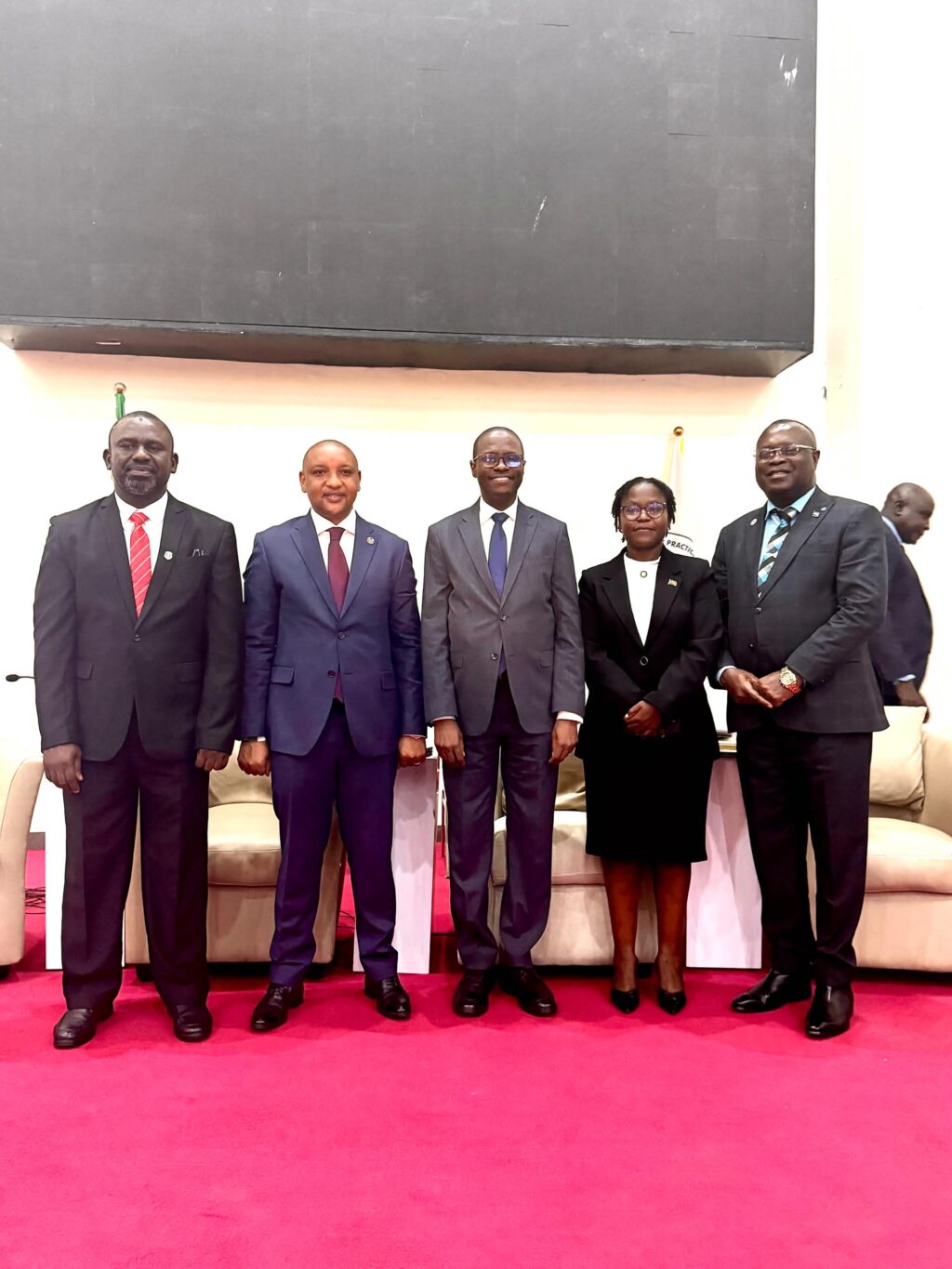
The occasion brought together voices of experience across different levels of stakeholders, particularly in diplomatic circle, with Kenya High Commissioner leading the pack and Deputy High Commissioner of Sierra Leone. Others included ICPC senior officers and students from the Anti-Corruption Academy of Nigeria, ACAN.
Suffice it to say that the Inaugural International Diplomatic Dialogue initiative came as a result of priority the anti-graft body, (under the leadership of Dr. Musa Adamu Aliyu) placed on war against corrupt practices in Nigeria.
About The Author