By Amieyeofori Ibim
The underutilization of the Port Harcourt and Onne Ports is no accident of history; it is the direct consequence of calculated federal policy. For decades, successive administrations—from the military regimes of the 1970s through the democratic dispensations of Obasanjo, Jonathan, Buhari, and now Tinubu—have entrenched a Lagos-centric economic model that punishes the South-South while rewarding one region with monopoly over maritime trade.
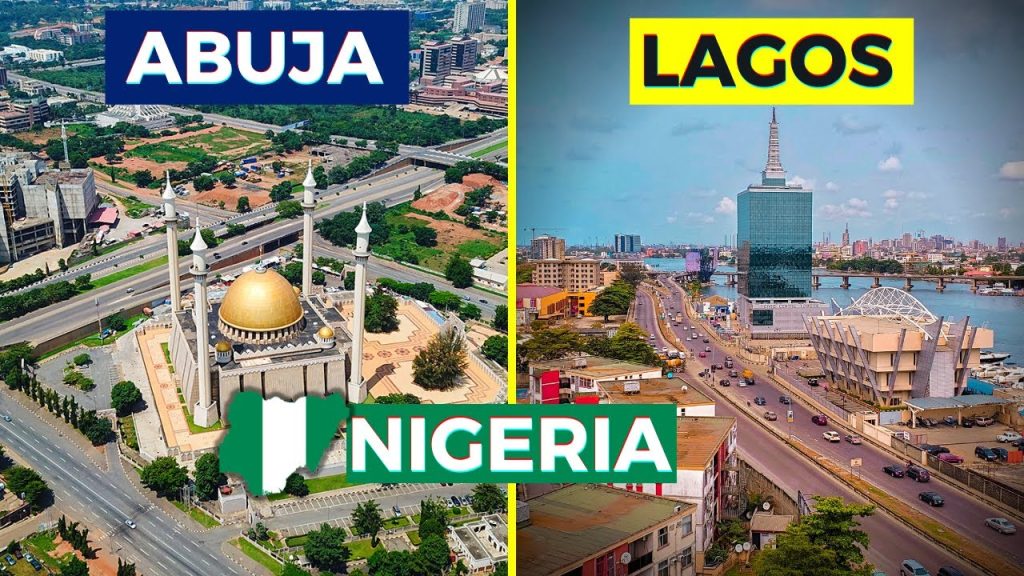
Governor Siminalayi Fubara’s call for port revitalization only underscores what every Rivers citizen already knows: the Federal Government has weaponized economic policy to keep Rivers State and the Niger Delta dependent. While Lagos enjoys massive federal port investments, modernized facilities, and dedicated rail lines linking Apapa and Tin Can, Rivers State is left with decaying access roads and ports deliberately starved of activity.
The Nigerian Ports Authority (NPA) itself is guilty. Since its centralization of cargo clearance in Lagos decades ago, the Authority has systematically diverted shipping traffic away from the Port Harcourt and Onne Ports. The excuse has always been “efficiency” or “security.” But the truth is political—keep Lagos booming, keep the South-South docile.
Even when the Jonathan administration initiated reforms to diversify port activity and reduce Lagos congestion, bureaucrats in Abuja sabotaged them. The Onne Port—strategically placed for West and Central African trade—was never scaled to its full potential because doing so would reduce Lagos’s stranglehold on maritime revenue.
Under Buhari, the neglect worsened. Despite his rhetoric about “ease of doing business,” the Apapa gridlock became a national scandal while Port Harcourt and Onne remained idle. Federal budgets poured billions into Lagos port access roads and rail links, while the East–West Road and the Onne-Eleme axis were left in ruins. This was not mere oversight; it was policy.
Today, under Tinubu, the story continues. Lagos, his political base, enjoys unrelenting federal attention, while Rivers State must beg for basic road rehabilitation. The message is loud and clear: Nigeria’s maritime economy must remain captive to Lagos, regardless of the inefficiency, unemployment, and regional injustice it breeds.
This lopsided policy is not only unfair; it is destructive to national growth. Forcing all cargo traffic through Lagos clogs the economy, increases logistics costs, and creates artificial bottlenecks. Meanwhile, ports in Rivers State, with deep waters and global shipping potential, lie dormant. Nigeria bleeds billions while Rivers suffers in silence.
This is why Governor Fubara’s intervention must not be taken as a polite request—it is a demand for equity. If Abuja can invest in a standard gauge railway to Apapa, why can’t it build a functional road to Onne? If billions can be allocated for Tin Can expansion, why can’t Port Harcourt Port receive the same attention?
The politics is obvious: by denying Rivers State a thriving port economy, Abuja weakens its capacity to generate independent revenue. This ensures perpetual dependence on federal allocations, controlled from the center. It is the same colonial playbook—keep the regions weak, keep them begging.
But this game has consequences. Youth unemployment in Rivers is a breeding ground for insecurity. A port economy would absorb thousands into productive jobs, reducing crime and boosting commerce. Abuja prefers to fund endless military operations in the Niger Delta rather than invest in the economic solutions that would make them unnecessary.
The hypocrisy is galling. The same federal government that rushes to commission dry ports in the North claims it lacks resources to rehabilitate Onne road. The same Nigeria that subsidizes inland cargo depots refuses to decentralize seaports in the South-South. Is this incompetence—or deliberate economic sabotage?
Governor Fubara is right to draw a line. Rivers State will no longer play second fiddle while feeding the nation with crude oil revenue. The ports must be revived, and Abuja must be held accountable. No nation prospers by suppressing its own economic arteries for the political comfort of one region.
This is bigger than Rivers; it is about the entire South-South. Akwa Ibom’s Ibom Deep Seaport, Delta’s Warri Port, and Bayelsa’s Atlantic potentials all suffer the same fate. Abuja’s Lagos obsession is a national crisis that undermines federalism and fairness.
Civil society, business leaders, and traditional institutions must rally behind Governor Fubara’s call. Abuja must hear—loud and clear—that Rivers State will no longer tolerate economic strangulation disguised as federal policy. The ports belong to Nigeria, not Lagos.
History will remember this moment. Either the Federal Government heeds the call and decentralizes maritime infrastructure, or it will be exposed as complicit in the economic asphyxiation of Rivers State and the South-South. Enough is enough. The ports must work, the roads must be fixed, and justice must be served.
Amieyeofori Ibim is a Journalist, political analyst and public affairs commentator.
ibimdarlinton@gmail.com
About The Author