Sometimes the problem is not that we lack what we need to fulfil our purpose. It is that we have not yet learnt to value what God has already placed within us.
Many people feel awkward about where they work, what they do, or the responsibilities entrusted to them. They look at another person’s confidence, gift, influence or results and quietly conclude that what they carry is not enough. This feeling becomes stronger when their abilities do not resemble those of the people who are most visible.
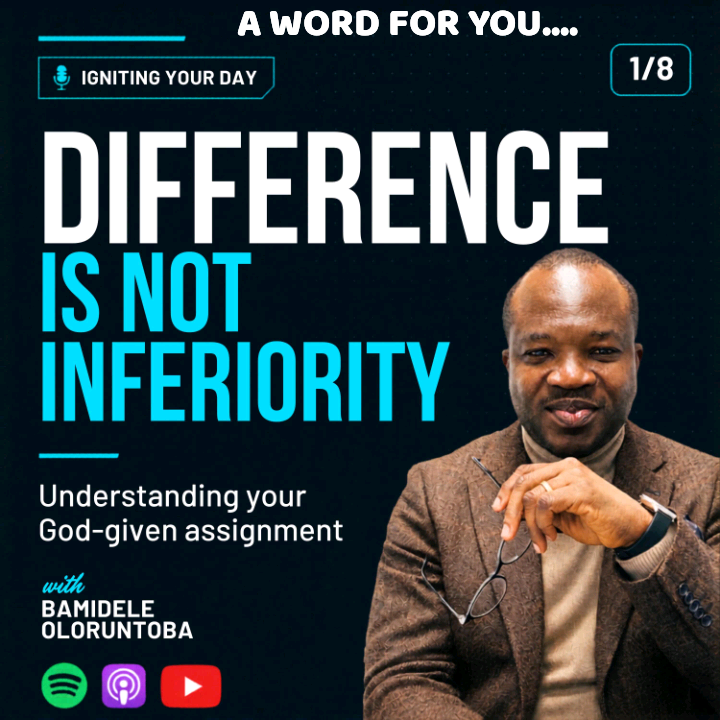
However, being equipped differently does not make us inferior. Difference is not necessarily evidence of limitation; it can be evidence of divine design.
Romans 12:3–8 explains that we are members of one body, but we do not all perform the same function. God gives different gifts according to His grace, and each person is expected to use what has been entrusted to them faithfully. Our differences ensure that each of us contributes something necessary to God’s purpose.
This understanding protects us from unhealthy comparison. It prevents us from despising our gifts, helps us become comfortable with who we are and teaches us to respect the grace upon other people’s lives. We no longer need to become someone else before we can feel useful, valuable or significant.
We must also learn that visibility is not superiority.
In 1 Corinthians 12:14–27, Paul uses the human body to explain the value of different functions. The eye cannot dismiss the hand, and the head cannot declare that it has no need of the feet. Some parts may be more visible, but the less noticeable parts remain indispensable. Although Paul was addressing the Church, this principle is equally valuable in families, workplaces and organisations. Healthy teams recognise that every meaningful contribution is important, including the work that happens away from public attention.
Perhaps you are doing a great deal in your workplace, yet you feel intentionally overlooked. Someone else may possess a particular skill that attracts recognition, while your own contribution remains largely unseen. Do not allow this to make you feel inferior. Their visibility does not make them superior, and your lack of visibility does not reduce your value.
Some abilities may appear irrelevant in your present environment, but that does not mean they are useless. What God requires in one season may differ from what He requires in another. Continue developing what has been placed within you. Your present season may be preparing you for a future opportunity in which that gift becomes essential.
I believe many people need this reassurance: God is still counting on you. He is counting on you in your family, organisation, community and place of assignment. Therefore, do not withdraw, become careless or bury your gift because another person’s role appears more prominent.
2 Corinthians 10:12 warns against measuring ourselves by ourselves and comparing ourselves with one another. Unhealthy comparison produces discouragement, insecurity and heaviness of heart. Instead of measuring your assignment by another person’s assignment, acknowledge the good things God has placed within you, as Philemon 1:6 encourages us to do.
Recognise your grace. Develop it. Use it faithfully. Understand the season in which it is needed. Like the sons of Issachar, who understood the times and knew what Israel should do, ask God for discernment to know when to speak, move, serve and present what you carry.
You do not need another person’s gift to fulfil your own assignment. Go forward with confidence, remembering this truth: visibility is not superiority, invisibility is not inferiority, and difference is not inferiority. It is often divine design.
listen to the podcast: Igniting Your Day with Bamidele Oloruntoba on Spotify and Apple Podcasts
Deleignition@gmail.com
About The Author