By Alfred Ajayi
A new report by the United Nations Programme on HIV/AIDS (UNAIDS) has stated that the world is at a critical moment which will determine whether world leaders will meet their commitment to end AIDS as a public health threat by 2030.
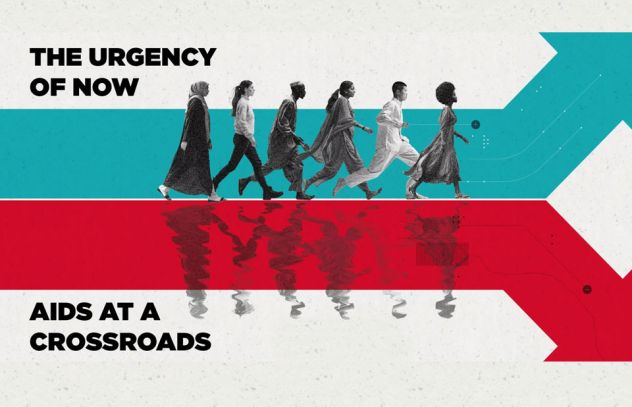
The report, entitled “The Urgency of Now: AIDS at a Crossroads”, assembles new data and case studies which all demonstrate that the decisions and policy choices taken by world leaders this year (2023) will decide the fate of millions of lives and determine victory over the world’s deadliest pandemic.
While noting that the end of AIDS is within our grasp this decade, the report regrets that the world is currently off track as 9.3 million, (nearly a quarter) of the 39.9 million people living with HIV globally, are not receiving life-saving treatment consequent upon which a person dies every minute from AIDS-related causes.
It notes that “Leaders pledged to reduce annual new infections to below 370,000 by 2025, but new HIV infections are still more than three times higher than that, at 1.3 million in 2023.
UNAIDS Executive Director, Winnie Byanyima, particularly expressed concern that the progress so far recorded was being endangered by a rising anti-rights push.
Byanyima emphasized that, “World leaders pledged to end the AIDS pandemic as a public health threat by 2030, and they can uphold their promise, but only if they ensure that the HIV response has the resources it needs and that the human rights of everyone are protected.
“Leaders can save millions of lives, prevent millions of new HIV infections, and ensure that everyone living with HIV can live healthy, full lives,” Byanyima submitted.”
The report observes that if leaders take the bold actions to ensure sufficient and sustainable resourcing and protect everyone’s human rights, the number of people living with HIV, (PLHIV), requiring life-long treatment, will be at around 29 million by 2050, while failure will increase the number to 46 million from 39.9 million in 2023.
According to the report, the expansion of people accessing treatment from the 47% coverage in 2010 is a landmark public health achievement, which has seen AIDS-related deaths halved from 1.3 million in 2010 to 630,000 in 2023. However, the world is off track from the 2025 target of reducing AIDS-related deaths to below 250,000.
While tremendous progress had been recorded in preventing new HIV infections which have fallen by 39% since 2010 globally and by 59% in eastern and southern Africa, the report shows that new HIV infections are rising in the Middle East and North Africa, Eastern Europe and central Asia and Latin America, even as gaps and inequalities persist.
Former Scientific Advisor to the US President, Dr Anthony Fauci, also noted that countries are making enormous progress to end the AIDS epidemic by 2030 but many there have been many challenges that could slow our efforts.
He advised, “We must do everything we can to be continually vocal and proactive. Failure is not an option here. In fact, it is unthinkable. If we all work together, we shall meet our common goal.”
Gender inequality is said to be exacerbating the risks faced by girls and women and driving the pandemic while HIV incidence among adolescent girls and young women is still extraordinarily high in parts of eastern, western, western, southern and central Africa.
Stigma and discrimination against marginalized communities are barriers to vital prevention and treatment services as key populations, including sex workers, men who have sex with men and people who inject drugs, represent an increased proportion at 55% of new infections globally compared to 45% in 2010.
The report maintains that HIV prevention and treatment services will only reach people if human rights are upheld, unfair laws against women and marginalized communities are scrapped, while discrimination and violence are tackled head on.
The report equally reveals that shrinking funding is retarding progress leading to rising epidemics in certain regions. “In 2023, total resources available for HIV 19.8 billion dollars dropped by 5% from 2022 and were 9.5 billion short of 29.3 billion dollars needed by 2025.”
More disturbing is the fact that domestic funding in low and middle-income countries, which make up 59% of total resources for HIV, is being constrained by the debt crisis and has continued falling for the fourth consecutive year, with a 6% decline from 2022 to 2023.
The report recommends increased resource mobilization especially in Asia and the Pacific, where the numbers of PLHIV are projected to almost double by 2050 and in Eastern Europe and Central Asia, Latin America as well as the Middle East and North Africa regions with growing epidemics and significantly depleting funding for HIV. Around half of the total resources needed by 2025, and 93% of the current HIV funding gap, are outside of sub-Saharan Africa.
The Urgency of Now: AIDS at a Crossroads shows that decisions taken this year by world leaders will determine if global targets are met, AIDS is ended as a public health threat by 2030, and a sustainable HIV response is built.
“The fraying of solidarity between and within countries is putting progress in danger, but the path that ends AIDS is a path that has been proven, and is a path that leaders have promised to take. Whether leaders fulfill their pledge to end AIDS is a political and financial choice. The time to choose the right path is now,” UNAIDS Executive Director, Ms Byanyima, said.
About The Author