annual allocation of N500 billion from the Senate will address Nigeria’s housing deficit
By Olawale Lamina
The Minister of Housing and Urban Development, Arc. Ahmed Musa Dangiwa has declared that the nation would require no fewer than 550,000 housing units to be constructed on yearly basis, amounting to N5.5 trillion over the next ten years to address acute housing deficit.
In a statement on the Ministry of Housing website, the minister stated this during a meeting with the UK Build and Construction West Africa Trade Mission in Abuja.
The housing minister pointed out the challenges possible by Nigeria’s 200 million population, which is growing at 2.5% annually, and harped on the necessity for housing that meets UN and WHO standards for habitability, safety, comfort, and infrastructure.
Arc. Dangiwa expressed optimism that the huge housing Gap in the country can be frontally addressed if a total of 550,000 housing units are built annually at the cost of N5.5Trillion, over the next ten years.
He told the delegation that the Ministry is tackling substandard housing—75% of Nigeria’s 42 million units, according to PwC—through urban renewal and new construction, while giving the rundown of the Ministry’s action plans, including the inauguration of four Housing Reform Task Teams, all finalizing their reports.
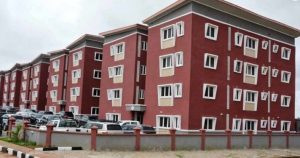
Arc. Dangiwa reviewed the Renewed Hope Cities and Estates Programme, launched by President Bola Ahmed Tinubu, intended to provide 50,000 housing units across Nigeria. This includes 1,000 units per site in each of the six geo-political zones and the FCT, and 250 units per site in the remaining 30 states.
He informed that already, groundbreakings had commenced for two Renewed Hope Cities (FCT and Kano) and twelve Renewed Hope Estates, totaling 6,612 homes.
It would be recalled that the Minister of Housing and Urban Development, Arc. Dangiwa, formally requested an annual allocation of N500 billion from the Senate to address the housing deficit under the Renewed Hope Estates and Cities initiative.
The amount represents less than 10% of the needed amount each year, he noted.
About The Author