
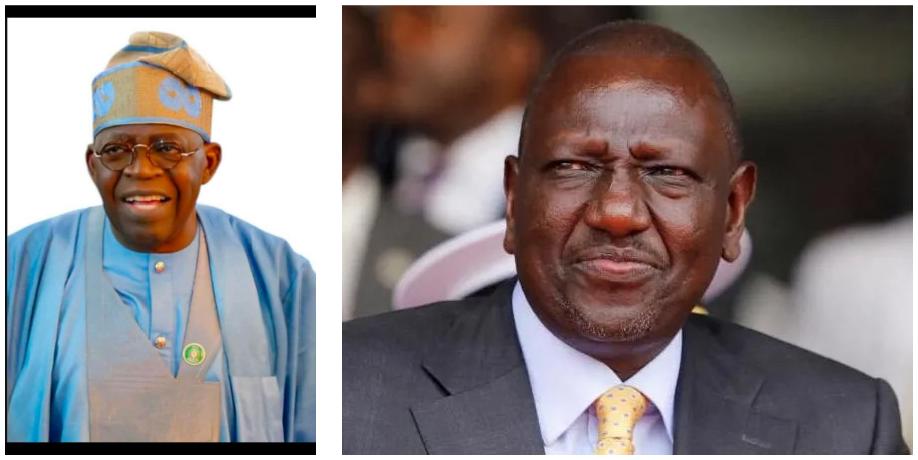
Online Reactions as Kenya’s Ruto compares, mocks Nigerians’ Spoken English
*Ruto agrees Kenya needs to sharpen its human resources
*Shehu Sani boasts of Wole Soyinka, Achebe, Chimamanda’ achievements
By Ola Kay
Kenyan President William Ruto May have stirred the hornets net following remarks in the public that suggest Nigerian-accented English was incomprehensible and would required a translator, thereby causing uproar in the social media space.
The Kenyan president was addressing citizens of his country living in Italy on (Monday), when he said: “If you listen to a Nigerian speaking, you don’t know what they are saying – you need a translator,” even as he boasted that Kenyans spoke “some of the best English in the world”.
Apart from Nigerians who were embarrassed by Ruto’s gushing now being condemned, other Africans online also frowned, accusing the Kenyan leader of demeaning a fellow African nation.
A Zimbabwean journalist, Hopewell Chin’ono, who expressed serious concern about Ruto’s remarks wrote that, “English is a colonial language, not a measure of intelligence, capability, or national progress.”
Kenya and Nigeria share English as an official language based on their common colonial history under the British.
Nigeria, the most populous country in Africa has more than 500 indigenous languages which shape its cadence and intonation, while Kenya’s Bantu, Nilotic and Cushitic mix give rise to its own accents.
Ruto who addressed Kenyans living in Italy said the country’s education system produced strong English proficiency and that it was difficult to understand Nigerians when they spoke English, perhaps without taking cognizance that Nigeria parades some of the most distinguished and world renowned writers and academics.
President Ruto gushed about the country’s proficiency in spoken English saying, “Our education is good. Our English, is good. We speak some of the best English in the world. If you listen to a Nigerian speaking, you don’t know what they are saying. You need a translator even when they are speaking English,” as he sparked laughter in the room.
He continued by saying that, “We have some of the best human capital anywhere in the world. We just need to sharpen it with more training.”
However, Ruto’s remarks have bred widespread reactions online, with many users condemning the Kenyan leader for showing a “deep inferiority complex rooted in colonial conditioning” by the nature of his address.
A former Nigerian senator and social critic, Shehu Sani posted on his X, referring to Wole Soyinka – the country’s only Nobel Prize winner – along with acclaimed authors Chinua Achebe and Chimamanda Ngozi Adichie.
It was a moment that other social media users sought to call Ruto’s attention to focus on addressing his country’s pressing issues such as the cost of living and unemployment rate, instead of choosing what they described as distractions.
Observers on the continent noted that online vitros between Kenya and Nigeria are a common occurrence, leading to volatile cyber wars on platforms like X. Critics on both sides have compared the two nations in terms of their economy, pop culture and sport and, more recently, political remarks.
Some pundits have also found a way to establish the reason behind Ruto’s diatribe against Nigerians, pointing out that Nigerian President Bola Tinubu faced a backlash from Kenyans online after stating that Nigerians were “better off than those in Kenya and other African countries” despite rising fuel prices at in the country.
Although Ruto did not make allusion to any specific comment, some online observers suggested his remarks may be in response to Nigeria’s President comments.
While the Keyamo authorities had yet to comment on the development, some Kenyans have defended their president online, preferring to argue that critics have miscontrued the intent of his remarks and missed the humour.
For instance, Nigeria has more English speakers than any other country in Africa and over time, the language has developed locally into what is now accepted as “Nigerian English” – a distinct and widely recognised variety shaped by the country’s history, cultures and everyday usage, according to the BBC report.
Some of Nigeria’s commonplace English expressions have increasingly appeared in mainstream dictionaries.
A BBC report also noted that Nigeria’s large and active diaspora, particularly in the UK, has also helped spread and shape these linguistic influences across borders.
About The Author







