
By Olawale Lamina
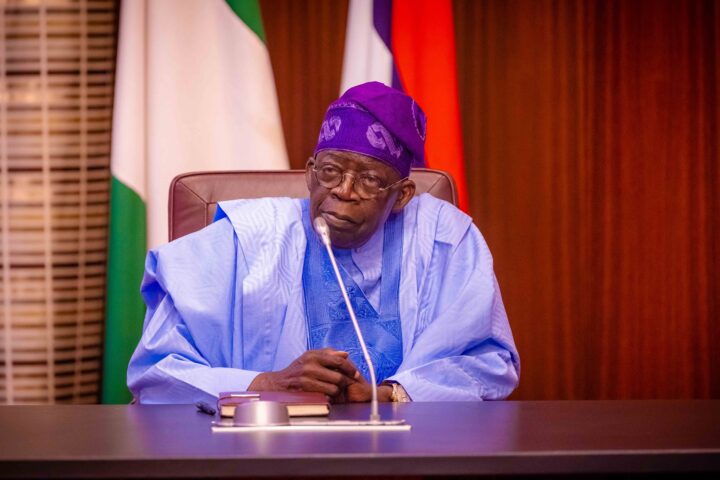
President Bola Ahmed Tinubu has ordered the immediate deployment of about 100,000 Compressed Natural Gas ,CNG, conversion kits nationwide, against the backdrop of the increase the the price of Premium Motor Spirit, also known as petrol.
The hike in the price of fuel was occasioned by the ongoing war in the Middle-East, involving the United States and Israel against the Islamic Republic of Iran, leading to distribution of production in major oil producing nations within the axis.
President Tinubu’s decision was conveyed through the Executive Chairman of the Presidential Initiative on Compressed Natural Gas (Pi-CNG), Ismaeel Ahmed, after meeting with the president at the State House, Abuja.
According to the Chairman Pi-CNG, the President watches global developments and he is concerned about their impacts on Nigeria’s energy costs, particularly the effect of the crisis in Iran would have on fuel prices and the cost of transportation.
“The President wanted to know what we are doing at the Pi-CNG and EV to scale up the availability of gas and CNG everywhere in the country so that people would have less cost of transportation.
“So the President has given a direct mandate that we should immediately deploy about 100,000 kits.
“We are working with so many other stakeholders that would incentivise and get it into the market immediately and be able to convert a lot of vehicles and tricycles for people to be able to access gas,” Ahmed explained.
He assured that, following the directive, the deployment would commence within two to three weeks, as activities in many conversion centres.
According to the Pi-CNG boss, the plan of action includes deploying vehicles and tricycles equipped with bi-fuel CNG and electric mobility capabilities.
Tinubu equally directed the Pi-CNG to speed up infrastructure development for gas refilling stations and electric vehicle charging points across Nigeria, with particular focus on the Northern corridor.
The Pi-CNG chairman also informed that 77 refilling stations are currently at different stages of development nationwide, with significant progress recorded in Kano State.
“In Kano right now, we have about two LCNG stations and about five, six daughter stations that are coming up as well,” he recalled.
He explained that the Northern corridor, stretching from Lokoja through Abuja, Kaduna, Zaria, Kano, and all the way to Maiduguri, will be equipped with multiple refuelling units to ensure seamless access to CNG for vehicle owners.
“The President wants results delivered very quickly so that Nigerians will be able to access the CNG and electric mobility,” Ahmed stressed, revealing that the initiative is partnering with domestic manufacturers and attracting international manufacturers interested in setting up assembly lines in Nigeria, capable of boosting job creation.
He also highlighted the fact that the Pi-CNG is collaborating with the Rural Electrification Agency to deploy solar-powered charging stations across the country, saying “We’re partnering with REA, that’s the Rural Electrification Agency, to be able to supply solar where we can set up charging stations across.”
He explained that Nigerians are already importing electric vehicles independently, and the government’s responsibility is to provide adequate infrastructure to support their use.
“Nigerians are already bringing in their electric vehicles regardless.
“What you have to do for them now is to be able to make sure that there is enough infrastructure for them to work with this, especially off-grid.”
The Presidential Initiative on Compressed Natural Gas was launched by Tinubu in 2023 as part of efforts to reduce dependence on petrol and diesel and lower transportation costs sequel to the removal of fuel subsidy. The initiative aims to convert one million vehicles to CNG and establish CNG refilling infrastructure across the country for easy accessibility.
It has been proven that CNG is significantly cheaper than petrol, with a litre equivalent costing approximately 60-70 per cent less than premium motor spirit.
About The Author







