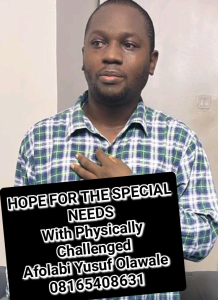
As we strive to build a more inclusive and compassionate society, can we truly claim to be empathetic if we fail to recognize the inherent value and agency of individuals with disabilities, reducing them instead to objects of pity or charity? This profound question lies at the heart of my personal reflection, “A Day at Alaba Market: Navigating Sympathy and Seeking Empathy”. In this account, I invite you to join me on a journey through the vibrant stalls of Alaba Market, where a chance encounter prompts a deeper exploration of the complexities of disability, empathy, and human connection. Through this narrative, I aim to challenge our assumptions, spark meaningful dialogue, and inspire a more perspicacious understanding of the experiences of individuals with disabilities. I invite you to read on, with an open heart and mind, as we navigate the intricacies of empathy, compassion, and the human experience.
A Day at Alaba Market..
The Saturday scorching Lagos sun beat down as my sister and I navigated the bustling Alaba Market. We were on a mission: to source vibrant senator fabrics, shimmering beads, and intricate gele materials for our latest fashion creations.
The air was thick with the energy of the market – the vibrant colours of the fabrics, the rhythmic chatter of vendors, and the ever-present hum of Lagos itself.
As we carefully selected our materials, I was acutely aware of the stares and the occasional whispered comments. It’s a familiar experience for me, as an individual with a disability. People often offer unsolicited help, their well-intentioned sympathy masking underlying assumptions about my capabilities.
One such encounter occurred as we were leaving the market.
My Left hand held my sister’s right as we walked through the market’s aisle out to the main road. The both of us holding hands was not because I was helpless, immobile, and still; but was because we are fond of each other, enjoying the company we share together each time. My guide-cane was outstretched As a stranger approached our direction, sharply shoving a folded wad of cash into my fisted hand which held my unfolded guide-cane. Her unvoiced action sounded like saying: “Here, take this,” as she offered, that action suggesting something she perceived to be an act of kindness on her part.
I politely declined, opening flat the fisted palm where the polymer Naira note was forced into, gently rejecting it as my expression explained that I did not require or seek or solicit her alms. Her swift expression switched from one of benevolent concern to one of bewildered confusion. This encounter, while perhaps seemingly insignificant, highlighted a deeply ingrained societal issue: the persistent misconception that individuals with disabilities are inherently dependent and incapable of self-sufficiency.
This experience resonated with some others I have encountered. A friend once shared with me one of her several experiences that underscores the pervasive nature of this issue. Sometime in Nnewi, Anambra State, she and some friends, all of whom were visually impaired, went on an outing. A stranger approached them and handed out what they thought were mere trinkets or tokens of appreciation. However, it was only when someone else revealed that the stranger had actually given them straight, smooth, shiny twenty-naira notes that they realized the true nature of the gesture. The group’s initial gratitude turned to anger and frustration, as they felt belittled and pitied rather than treated with dignity and respect. This experience, coupled with mine, highlights the urgent need for a shift in perspective – one that recognizes the inherent value and agency of individuals with disabilities, rather than reducing them to objects of alms or pity.
PWDs are often objectified and portrayed as weak alms-seeking persons, our needs reduced to just financial assistance. This patronising approach not only undermines one’s dignity but also perpetuates harmful stereotypes that limit our potential.
It is crucial to understand that individuals with disabilities are not defined by their limitations. We are multifaceted individuals with unique aspirations, talents, and contributions to society. We may require reasonable accommodations or support, but we are not helpless, and should not be perceived or viewed as societal recipients of charity and alms.
Moving forward, a shift in perspective is necessary. Instead of offering unsolicited help, let us engage in genuine dialogue. Ask us about our needs, our aspirations, and our experiences. Listen to our voices, and respect our autonomy.
True empathy lies in recognising our inherent value and agency. It involves acknowledging that our needs may vary, and that they may extend beyond financial assistance. We may require accessible infrastructure, inclusive communication channels, and simply, understanding and patience as we navigate a world often designed without our needs in mind.
By fostering a culture of empathy and respect, we can create a more inclusive society where individuals with disabilities are not merely tolerated but valued for their unique contributions. Let us move beyond sympathy and towards a genuine understanding of the diverse needs and experiences of individuals with disabilities. Together, we can build a more equitable and inclusive future for all.
This reflection is not meant to deter well-meaning individuals from genuinely helping persons with disabilities, but to invite them to “think-am well” before offering financial assistance.
Let us take a moment to “gist” with the individual, understand their unique needs, and ask if our assistance is truly required. By doing so, we can provide more meaningful support and foster a culture of empathy and respect. I hope you “grab the gist” of this reflection, and I invite you to share your thoughts – “wetin you think”?
About The Author