
BRICS has suspended its plan to create single currency to match and replace the US dollar,but has opted for connecting members’ payment systems and expanding the use of local currencies in cross-border trade
The bloc now focuses on pursuing a network of local-currency payment and settlement systems in members’ local currencies.
BRICS is an international group of eleven major emerging economies working to increase cooperation and reshape global governance.
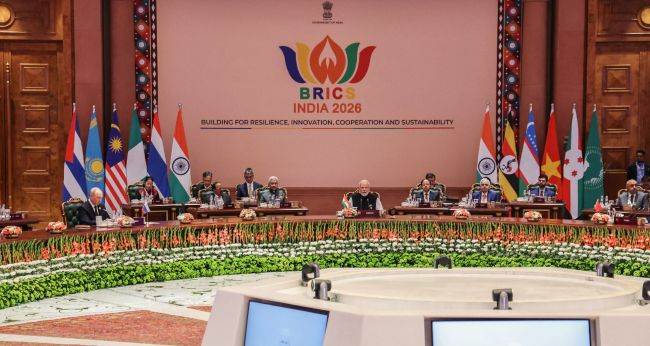
India made the disclosure at the 18th BRICS summit, confirming there is currently no proposal for a common currency among the expanded group.
The New Delhi Declaration supported improving cross-border payment systems and encouraging the New Development Bank to expand local-currency financing.
The bloc is pushing to allow more trade to be settled directly in their own currencies without routing transactions through the dollar.
India hosted the 18th BRICS summit in New Delhi from September 12 to 13,
India’s Secretary for Economic Relations, Sudhakar Dalela, stated that discussions would continue on bilateral trade settlements using local currencies, arguing that the approach could help reduce transaction costs and make cross-border payments easier.
The shift was contained in the New Delhi Declaration, which stopped short of endorsing a shared BRICS currency.
Rathers leaders from the group backed work on more efficient cross-border payment mechanisms and continued discussions on using BRICS local currencies for trade settlements and investment.
According to Business Insider Africa, “The declaration specifically recognised the work of the BRICS Payment Task Force on payment interoperability and cross-border transactions, while noting that there is no single approach that would suit all members.”
It also encouraged the New Development Bank (NDB) to expand financing in local currencies and diversify its funding sources, potentially giving local-currency financing a bigger role in infrastructure and development projects across emerging economies.
As it affects Africa, the direction matters because South Africa, Egypt and Ethiopia are among the BRICS members, while the bloc’s broader partnership network includes other African economies.
South African President Cyril Ramaphosa lent his voice the just concluded 18th BRICS Leaders’ Summit in New Delhi. He supported greater use of local currencies and stronger cross-border payment systems, aligning with the bloc’s push to make its financial systems more interoperable.
Rather than introducing a new currency that would require agreement among increasingly diverse economies, BRICS is currently pursuing mechanisms that allow countries to trade using their existing currencies and improve the systems connecting their financial institutions.
According to Reuters, the New Delhi summit also emphasised local-currency trade and interoperability between central bank digital currencies, although differences remain over the design of BRICS payment infrastructure.
The latest stand of the bloc is not an indication of permanent rejection of a common currency. It is an indication that BRICS members are prioritising local-currency settlements and payment-system interoperability as more immediate steps towards reducing reliance on the dollar in intra-bloc trade.
BRICS is an international group of eleven major emerging economies working to increase cooperation and reshape global governance.
About The Author







