By Alfred Ajayi
The Nigerian Meteorological Agency (NiMET) had on Tuesday, 20th February, 2024, while presenting the 2024 Seasonal Climate Prediction (SCP) in Abuja, forecast that rains will be delayed in some parts of the country, while many other states like Borno, Abia and Akwa Ibom would witness early onset. Rainfall is a major source of water needed for crops to grow. Also, the amount and frequency of rainfall are critical factors for farmers, especially those poised to plant early at the start of the rainy season.
Apart from being the primary natural source of water for crops, providing adequate moisture in the soil for seed germination, plant growth, and overall crop development, rainwater carries essential nutrients into the soil, for plant roots to absorb. This helps in maintaining soil fertility and ensures healthy crop growth.
Rainfall also helps in disease control as it washes away pests and diseases that are capable of harming the crops, while also helping in diluting and spreading natural pesticides, (certain types of fungi and bacteria), which can suppress harmful pathogens. Rainfall is equally helpful in regulating temperatures in agricultural areas, through the prevention of extreme heat or cold which can stress plants. Adequate rainfall is equally potent in preventing or reducing drought conditions, and ensuring continuous crop growth while also minimizing the risk of crop failure.
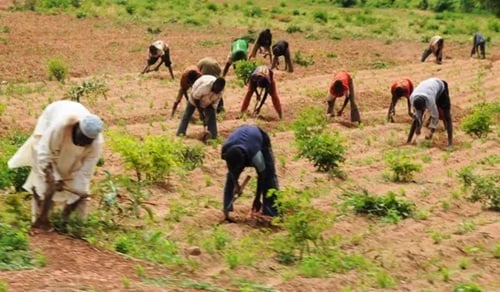
When rainfall is delayed or is falling at a lower rate than needed, the tendencies are high for crop failure leading to low or poor yield. It is therefore not uncalled for that the farming populations across many Nigerian states have been lamenting the situation since 2024. “It is not that rain has not fallen here, but it is not irregular and inadequate to help our farming work. Since ten years I started farming, this year is the worst year I have ever seen.
“After planting, when the crops are germinating, the rain stopped for two to three weeks. Before it started again, some of the crops have died off while others were not growing well. Yet, the farm is overgrown with weeds. So, I have to clear it again before replanting. It is a waste of money, time and energy,” Adewumi Kehinde, one of the farmers in Osun, one of Nigeria’s states lamented.
Kehinde is not alone in this nasty experience as thousands of others scattered across Nigerian states are at the receiving end of the situation. “I feel much more for those joining farming for the first time this year. Many of them will be discouraged.
“I know a man, who planted corn the first time and the farm was flourishing before the rain ceased for three weeks and everything went back to zero. When the rainfall resumed, he replanted and the rain ceased again. He planted the third time and he may survive it because the rains are becoming moderate and stable.
Early or delayed rains are traceable to a combination of factors. It can be as a result of variation in temperature which propels early rain formation same as ocean currents. Shift in prevailing wind patterns can bring moisture-laden air sooner than usual even as topography (mountains and other geographical features) can exert some effect on when and where rain falls. Also influential is the atmospheric pressure systems, which has to do with high or low-pressure systems can equally influence the timing and intensity of rains.
Besides, vegetation and land use can also play a role here as forests and other vegetation influence local climate conditions, potentially leading to earlier rains. Perhaps the greatest culprit in the irregular rainfall patterns witnessed across the country is the climate change. This is because long-term changes in climate are known to alter the timing of seasonal rains.
Delayed rainfall can significantly impact food production and food security programmes at various levels in Nigeria. It can lead to reduced crop yields, especially for crops which rely on timely rains for growth and maturation, such as maize, rice, and millet. Severe delays in rainfall can lead to complete crop failure, particularly for rain-fed agriculture which is predominant in Nigeria.
Prolonged dry periods also expose soil to degradation as a result of soil erosion and loss of fertility, which affect future agricultural productivity. The fear of increased pest and disease incidence is higher during drier conditions. This further reduces crop yields. All the impacts enumerated above cumulatively affect food security programme at all levels of governance.
Low yield and crop failure equally lead to food shortages, which dangerously hampers the availability and affordability of food for the populace. Closely related to this is inflation (rising cost of available food items), resulting from low yields and food scarcity.
This harshly impacts the citizenry especially the low-income families which have their purchasing power steadily eroded.
“You can imagine, the month of May is ending and you hardly see corn anywhere around us and where you see, it is too costly. By now, corn should be everywhere but the smallest you can find around now is 200 naira which is not supposed to be more than 50 naira. That is one of the effects of rain not falling as expected”.
With low yield, crop failure and inflationary trend comes increased malnutrition as a health related effect. This particularly affects vulnerable groups such as children pregnant women, the elderly among others and must not be allowed to persist uncontrolled for a long time. It is a wake-up call for government and other critical stakeholders to wake up to the need to prevent the looming disaster.
Delayed rains can also bring huge strain on government resources as most designed programmes aimed at preventing food insecurity such as subsidies and food distribution schemes, will likely face increased pressure and require more funding to remain sustainably successful.
This may compel government to activate emergency relief programmes such as immediate food aid and financial support to affected farmers and communities.
One of the solutions will be for the country to look into robust investment in irrigation system to ensure availability of water for agricultural activities all-year round without compulsorily depending on rainfall. This can also mean expansion of existing irrigation infrastructure across the country.
It will also be useful to build the capacity of farmers in the area of water conservation techniques and efficient farming practices while efforts are being intensified to promote the cultivation of drought-resistant crops by farmers.
Whether at the level of government, corporate bodies or individual, investments must be made into agricultural research to develop more resilient crop varieties and farming methods.
Addressing the impacts of delayed rainfall requires coordinated efforts at all government levels to ensure food production and food security are maintained.
Farmers must also look into alternative livelihoods, which enable them to engage in secondary occupations like poultry farming, beekeeping, or agro-processing to supplement income.
Early Warning Systems equally play a useful role in passing useful and timely weather-related information to farmers which help them in making informed decisions and planning their agricultural activities better.
Farmers can equally take advantage of government intervention programmes during drought conditions. Such programmes include subsidies designed to assist farmers during drought conditions.
Another strategy farmers can adopt for survival is formation of cooperatives or groups. This helps them to share resources and knowledge, making it easier to cope with adverse conditions collectively.
Soil Management is another proven method of helping crops retain water for long. This is achieved through the use of mulching to retain soil moisture, improving soil organic matter, and practicing no-till farming to reduce water evaporation. Government also needs to augment whatever is locally produced with the imported ones to meet the local demand. Food imports will help greatly in bridging the gap, which can strain foreign reserves and impact the national economy badly.
Be that as it may, it’s important to also note that apart from delayed or inadequate rainfall, excessive rainfall, such as heavy storms or prolonged periods of rain, can also have negative impacts on agriculture. Such effects include: flooding, soil erosion, and waterlogged plantation which affect crops negatively.
Therefore, while rain is essential for agriculture, the timing, amount, and distribution of rainfall are critical factors that can determine its overall benefit or detriment to food production
“When it is too much, it is bad. When it is not enough, it is destructive.
So, we need moderate and stable rains to produce food in adequate quantity for the nation. Now that it is becoming moderate, we are optimistic that all will be well after all,” Kehinde concluded.
A purposeful, useful and result-oriented synergy is strongly solicited between the government, the private sector, Non-Governmental Organizations and international partners towards addressing all threats to food security in Nigeria. However, government at all tiers must take the lead and work towards attracting support and assistance from other critical stakeholders.
About The Author