Worried by this development, the Rule of Law and Anti-Corruption (RoLAC) 2 Programme, funded by European and implemented in Nigeria by International Institute for Democracy and Electoral Assistance, (IIDEA), recently engaged 12 lawyers to operationalize the law through the provision of free legal services. This move is aimed at restoring the dignity of PWDs by ensuring that their rights are not only respected but also safeguarded.
By Alfred Ajayi
Thousands of Persons With Disability, PWDs, in Anambra State have had their human dignity compromised and their pride bruised on several occasions by those they trust as helpers and caregivers. Those with visual and hearing impairments are soft targets for these abusers who took advantage of their inability to see or express themselves verbally and sometimes are exploited sexually.
This was the case with Chioma Chuma (not her real name), a visually impaired young lady who was raped by the commercial motorcyclist she engaged to convey her home from an errand.
Shattered and disappointed, Chuma, after a long time of hesitation, reported the matter to the state chapter of the Joint National Association of Persons with Disability. The chairman of JONAPWD, Comrade Ugochukwu Okeke years ago, recounted how helpless they were in Chuma’s situation.
“She came and said she was raped. But, we could not do anything to assist because she, being visually impaired, did not see the person who raped her. The okada man was not a known person to her. So, it was a complicated matter. It died there because we could do nothing practically.
Chuma returned home helplessly hopeless to face the agonizing effects of the violation. More troubling for her was that the perpetrator has escaped the law forever.
Although the State Disability Rights Law was not in existence at the time, the victim could not have leveraged it because the perpetrator has disappeared into thin air and her lowly family background could not afford the costly journey of pursuing justice.
Consequently, she packed the pieces of her life as she braved her new reality in the face of no tangible assistance.
Why the law?
In a bid to guarantee and protect the rights and privileges of Chuma and other persons with disability, Anambra State Government took a pioneering step in 2018 with the enactment of the Disability Rights Law, the first of its kind in Nigeria, as an all-encompasing response to the yearnings of PWDs for relief and redress. The law in its sections 20 prohibits discrimination and harmful treatment against them, while many other sections address their other grave concerns.
Apart from Anambra, Abia and Enugu have enacted similar laws without commissions in place to enforce them, while Ebonyi and Imo states are yet to enact the law.
However, the Anambra law was inactive until the Disability Rights Commission meant to enforce it was constituted and inaugurated in February 2022 at the twilight of the immediate past administration of Governor Willie Obiano. Many PWDs like Chuma were elated hoping for a strong legal protection from all abuses.
Sadly, respite was still far-fetched as the Commission lacked funds to perform its statutory duties. Consequently, abusive and discriminatory tendencies continued unabated since perpetrators have always evaded justice, no thanks to the non-operational nature of the Legal Services Department of the commission as provided for in section 9c of the law.
RoLAC to the Rescue
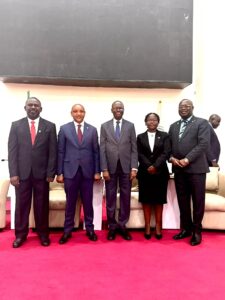
Worried by this development, the Rule of Law and Anti-Corruption (RoLAC) 2 Programme, funded by European and implemented in Nigeria by International Institute for Democracy and Electoral Assistance, (IIDEA), recently engaged 12 lawyers to operationalize the law through the provision of free legal services. This move is aimed at restoring the dignity of PWDs by ensuring that their rights are not only respected but also safeguarded.
Apart from contributing to the enactment of the law and the inauguration of the DRC, RoLAC this time around, organized capacity building workshop for cluster heads of the disability community to keep them abreast of developments.
Josephine Onah is the Project Coordinator of RoLAC Programme in Anambra State. “The law has taken a lot to come to life. At RoLAC, we can’t stop the support until the framework we’ve put in place is sustained. We want to see the Disability Rights Law implemented from the human angle as contained in the UN protocol and the constitution of Nigeria, which are against every form of discrimination,”.
“I plead with the lawyers to support the DRC to invoke relevant provisions of the law to restore the dignity of PWDs in Anambra”.
Commenting on the operationalization, the Chairman of DRC, Chuks Ezewuzie, urged PWDs to take advantage of the RoLAC’s kind intervention to halt all forms of abuse against them.
“Come over to the DRC and help us was our Clarion call to RoLAC and it answered in a real super way. This commission was established as a one stop shop for all issues bordering on disability in the state.
“The 12 lawyers engaged have been trained and will be helping us to provide access to justice for PWDs. Every wrong has a redress. So, we must protect and defend the rights of PWDs as enshrined in the law,” Ezewuzie contended.
The probono lawyers are upbeat and poised to offer their services in a manner that restores the dignity of every person with disability. One of them, Olivia Ezekwe, expressed their readiness to give the law the needed teeth.
“One major impediment to the implementation of the law is the cost of legal representation. The pro bono services will remove that impediment. The trained lawyers are fully committed to ensuring that PWD’s are no longer hindered from pursuing justice because legal representation is now completely free and accessible in the state.
“Section 20 (2) of the Law already empowers a PWD to seek legal redress where there is a violation of their rights,” she said.
PWDs Welcome The Development
Members of the disability community in the state welcome the development through their leader, Ugochukwu Okeke, the Chairman, Joint National Association of Persons with Disability, (JONAPWD), who sees the operationalization of the legal services department as the best thing that has happened to the community.
“For me, without the law being tested in a law court, it is a mere academic exercise. The operationalisation has enabled the commission to take up cases brought by PWDs, ensuring that justice is served against the perpetrators”.
“When appropriate sanctions are given to the offenders, compliance rate to the provisions of this law will increase. Then, people will know that there is life in this law”.
Okeke also acknowledged the pace-setting place of Anambra in issues of disabilities in the South East Region. “I must say kudos to the RoLAC team in the state for supporting these processes. Abia and Enugu passed their laws only recently. We have been taking the lead since 2018. Once the legal team starts working, others will come to Anambra to learn how we do things here.
The operationalisation of the law is equally expected to boost the economy of PWDs as some sections of the law compel both individual or corporate violators to pay some damages to the victims and the state government.
By the time the first case goes to court, Anambra State would have set another pace in giving life to the document, which had been described as a paper tiger for over 5 years and the likes of Chioma Chuma will be better protected in their physical realities.
About The Author