Abu Mahmud
The recent realignment within the African Democratic Congress (ADC) is a direct response to its founding promise of transparency, accountability, and people-centered politics, free from money politics, godfatherism, and elite domination. The party seeks to harness a powerful opposition coalition while safeguarding its founding ideals from elite capture. Success will depend on how rigorously the ADC enforces its transparency and accountability mechanisms as the 2027 race intensifies.
As the 2027 elections approach, that promise is being put to the test. The ADC’s realignment is a high-stakes balancing act. The party must decide whether to open its doors to opportunistic politicians whose primary currency is personal ambition. Such “wolves” may bring short-term numbers, but they threaten the party’s credibility, cohesion, and long-term legacy. The ADC’s true strength lies in shared values, not in the whims of any single individual.
If the ADC admits politicians driven more by personal ambition than by shared ideals, it risks undermining its very foundation. As electioneering draws nearer, the party stands at a crossroads: either remain faithful to its principles or sacrifice them for short-term political advantage. Its credibility, cohesion, and long-term relevance depend on choosing the former.
As Nigeria moves toward the 2027 general elections, the country needs leaders of integrity—visionary, unifying, and committed to national development above sectional or personal interests. Such leaders must be accountable, open to competent new talent, and committed to institution-building, job creation, poverty reduction, and national cohesion, rather than divisive, self-serving politics.
At this critical moment, Nigerians cannot afford leadership captured by individuals who exploit poverty and emotion through populist rhetoric while pursuing narrow ambitions. Citizens must distinguish between politicians who seek power and wealth for themselves and those who serve with integrity, transparency, and a genuine commitment to community development.
A political party is bigger than any individual. It is built on shared values and collective purpose, not personal ownership. When individuals attempt to dominate a party, democracy weakens and godfatherism thrives.
Even before the election season, there is a real possibility that the ruling establishment could attempt to weaken opposition forces through proxy infiltration, sowing discord within emerging coalitions.
This concern is heightened as the PDP faces what may be its weakest moment since inception.
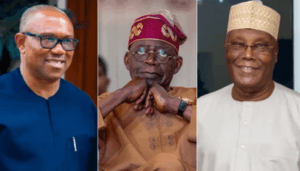
Atiku Abubakar has emerged as a central figure in a new opposition coalition that has adopted the ADC as its platform for 2027. The coalition includes figures such as former Senate President David Mark (interim national chairman), former Osun State Governor Rauf Aregbesola (interim secretary), Nasir El-Rufai, Rotimi Amaechi, and others. They have held consultations on party structure and strategy, advocating transparent primaries and urging members—including Peter Obi—to fully transition into the ADC. Atiku’s exit from the PDP and registration with the ADC signal a coordinated effort to challenge the APC government.
This context raises a critical question: can the ADC afford to admit politicians whose entry is conditioned on personal guarantees?
One recurring feature of some Kano-based politicians is the tendency to conflate local dominance with national relevance. Through emotionally charged rhetoric, such figures mobilize loyal supporters while mistaking regional popularity for nationwide appeal. More troubling is the practice of setting conditions even before joining a party.
Rabiu Musa Kwankwaso, has openly stated that he would only defect to another party if offered the presidential or vice-presidential ticket for 2027. He argued that his decades-long political career entitles him to such consideration, insisting that his supporters would accept nothing less. Yet this posture contrasts sharply with the conduct of other coalition members who have subordinated personal ambition to collective negotiation. To demand special concessions while others make sacrifices raises serious questions about motive, sensitivity, and commitment to a shared cause.
About The Author