.”..we see the protest as an opportunistic attempt by conflict entrepreneurs and power mongers to capitalise on the crisis of cost of living to wage a war of attrition and insurrection against a duly elected government.”
By Olawale Lamina
The Independent Media and Policy Initiative, IMPI, has decried the manner some individuals and groups are laying the groundwork for insurrection under the cover of a peaceful protest, cautioning against acts capable of disrupting peace in the country.
In a statement signed by its Chairman, Niyi Akinsiju, the policy analyst group noted that although protests remain acceptable means of expression in a democracy, but no government will tolerate a call to anarchy and destruction of private or public property.
It noted that it is instructive that, “A peaceful protest is often organised, orderly, and non-violent. It is supposed to be orderly,” while condemning a situation that may spiral out of control.
According to the policy group, “For several weeks, we have quietly watched as some individuals and groups mobilized for what they call ’10 days of rage’ starting from August 1. Their mode of preparation gauged from their actions and speech shows that they may be bracing up for riots, chaos, and violence, which are antithetical to peaceful protest.
“Engagement in peaceful protest as a means to reduce cost of living in this country should be seen from the perspectives of actions being taken to ameliorate whatever conditions that are considered unpalatable.
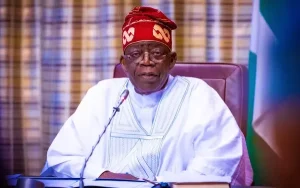
“And interestingly, within the time some were mobilizing for the protest, the administration of President Bola Tinubu had continued to roll out policies and programmes targeted at stemming the effects of the global cost of living crisis as it affects the country.
“Rather than acknowledge that the administration had not been sitting idly or ignoring the need to provide succour for the people, a group of disgruntled elements who will not settle for less but anarchy had continued to use the social media space to steer mutiny and rebellion against the government, ostensibly for political reasons.
“A close look at the list of demand shows that what they called a protest against the cost of living crisis is indeed a call to anarchy in the short term, and regime change in the long term.
Again, the group wondered how a protest ordinarily aimed at drawing attention of government to economic issues would now extend to giving the country a new constitution through a Sovereign National Conference and the release of the leader of the Indigenous People of Biafra (IPOB) Nnamdi Kanu, who is currently standing trial before a court of law should gain traction over and above the general wellbeing of Nigerians
The group posed a rhetorical question asking, “How can anyone rationalize the call for President Tinubu to scrap the Senate, approve a minimum wage of N250,000, and carry out an ‘immediate reconstitution of the electoral body, INEC? adding that, “Many of the demands are beyond the powers of the President so from an analysts point of view, we see the protest as an opportunistic attempt by conflict entrepreneurs and power mongers to capitalise on the crisis of cost of living to wage a war of attrition and insurrection against a duly elected government.
“We urge Nigerians to see the protest call as nothing but a call to anarchy because we sincerely do not know how the federal government could accede to the demands.”
IMPI also picked holes in the narrative that the President Tinubu administration is not doing anything to provide relief for the citizenry.
“While we acknowledge that economic reforms have brought some hardship in their wake, it is not true that the administration has not been responsive to the issues.
The policy group enumerated some of the steps taken by the Tinubu-led administration to include,reduction in the number of taxes from 60 to 10 as well as the elimination of withholding tax for businesses with annual turnover of N25m, N36bn Compressed Natural Gas (CNG) cost effective alternative to petrol for mass transit, apart from a one-off N10bn allocation to all 36 states and the Federal Capital Territory for the procurement of buses under the National Support and Infrastructure Programme.
The IMPI concluded by observing that, “To stem the tide of rising food inflation, President Tinubu recently approved a 150-day duty-free window for food imports while also introducing measures to ramp up local food production.
“And for the youth population, there is a historic Student loan scheme that is up and running while the reinvigorated National Youth Investment Fund (NYIF) would be rolled out in a few day’s time to put N110bn in the hands of young business owners.”
About The Author