

By Amieyeofori Ibim
The recent tragedy that claimed the lives of two teenagers, Miracle Peter and Emma, in the Eligbolo community of Obio/Akpor Local Government Area is not merely a sad accident — it is a stark indictment of years of negligence, failed planning, and administrative indifference. The floods that swallowed these young lives are not new to Port Harcourt and its environs; they have become an annual curse, a predictable disaster that government after government has failed to confront with the seriousness it demands.
Each rainy season, the people of Rivers State brace for impact. Streets turn into rivers, homes into islands, and livelihoods into floating debris. Yet, every year, officials issue the same hollow assurances of “urgent intervention,” and nothing fundamentally changes. The Eligbolo incident only brings into sharper focus the chronic failure to manage the state’s drainage and urban planning systems, particularly in Obio/Akpor, one of the most densely populated and economically vital local councils in the state.
The story of Miracle and Emma — two boys whose only mistake was playing near a canal that should never have been left so perilous — is a grim reflection of a society that has normalized tragedy. Their deaths were preventable. The canals along G.U. Ake Road, Nta Nwogba, Egbelu Ozodo bridge, etc have long been known for their poor flow and frequent overflow during rainfall. Residents have pleaded repeatedly for dredging, desilting, and proper channeling of stormwater. Those pleas have gone unanswered.
Flooding in Rivers State is not an act of nature alone — it is a consequence of human inaction. It is the product of blocked drains, unregulated construction, and an absence of urban discipline. When people build over waterways and refuse dumps clog up every channel, the floods are inevitable. Yet, government oversight remains largely reactive — more concerned with condolence visits than with sustainable solutions.
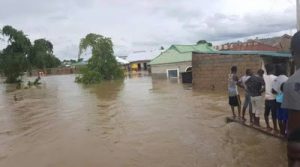
Worse still, the rampant theft of manhole covers from major drainage systems has become an unseen but deadly menace. Across Port Harcourt and Obio/Akpor, open drainage holes now line the streets like traps waiting for their next victim. At night and during floods, these uncovered drains are almost invisible, turning every road into a potential death trap. Children are particularly at risk — one misstep on a flooded street could mean a fatal plunge into an open manhole. It is inexcusable that such a basic element of public safety continues to be ignored.
The condolence visit of the Speaker of the Rivers State House of Assembly, Martin Amaewhule, though commendable in its compassion, underscores this troubling culture of reactive governance. The Speaker’s promise to “take concrete steps” must not go the way of similar pronouncements that evaporate once the floodwaters recede. His N2 million gesture to the grieving families is a token of sympathy, but what the people of Obio/Akpor need is not tokenism — it is transformation.
True leadership demands foresight. The time for platitudes has passed. The Rivers State Government must, as a matter of urgency, institute a comprehensive flood management strategy. This should include the dredging of critical canals, enforcement of environmental laws, relocation of structures obstructing drainage paths, and the establishment of an emergency flood response unit equipped to act before lives are lost.
Equally crucial is the role of local councils. Obio/Akpor, being one of the state’s most urbanized areas, cannot continue to function without an effective environmental control mechanism. The council authorities must work hand in hand with the Ministry of Environment and the State Urban Development Board to implement and monitor drainage projects, not just award them. Accountability must return to local governance.
Beyond infrastructure, there must also be a moral reckoning. How long will Rivers people continue to mourn the same type of loss, year after year? When will human life outweigh the comfort of political convenience? When will citizens demand accountability from those entrusted with their welfare? The mourning in Eligbolo should awaken both government and governed to the heavy cost of complacency.
Environmental degradation in Rivers State is not limited to flooding; it is part of a broader culture of disregard for planning, sanitation, and sustainability. From oil pollution to blocked waterways, the evidence of neglect is everywhere. The state must recognize that economic growth cannot coexist with environmental collapse. A thriving Port Harcourt must be a clean, safe, and livable city — not one where death lurks in the gutters.
The government should also engage the private sector and community stakeholders in a coordinated flood control effort. Drainage maintenance, waste management, and public awareness campaigns cannot be left to government agencies alone. A partnership-driven approach that empowers communities to take ownership of their environment will achieve far more than bureaucratic directives ever can.
The tragic drowning of two teenagers should mark a turning point, not another footnote in the long chronicle of ignored disasters. Let their names — Miracle and Emma — become symbols of the urgent need for reform. Let their memory challenge the conscience of every policymaker in Rivers State to act decisively and act now.
There is still time to avert future tragedies, but that time is running out. The rains will return, as they always do, indifferent to excuses and unfulfilled promises. The question is whether the government will rise to the occasion before more lives are lost to the waters of neglect.
Rivers State cannot continue to drift between mourning and forgetfulness. The people deserve more than sympathy — they deserve safety, planning, and leadership that values human life above all else. Only then can the tears in Eligbolo dry with meaning.
Amieyeofori Ibim is a seasoned Journalist, political analyst and public affairs commentator.
ibimdarlinton@gmail.com
08112095925
About The Author








