Doctor who is dedicating her career to solving mystery of colon cancer in young people reveals what could be causing explosion of cases – and the three warning signs of disease
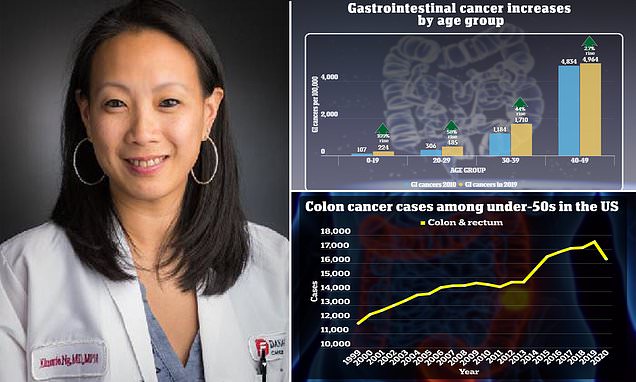
Dr Kimmie Ng, an oncologist at the premier Dana-Farber Cancer Center has dedicated her life to the study of GI cancers and is particularly concerned about the rise in such cancers in people under 50Dr Kimmie Ng has become a frontline witness to one of the greatest medical mysteries of her generation.
The Boston oncologist has launched the world’s first center dedicated to studying an explosion of cancers in young people.
In the 1990s, doctors began seeing a rise in the number of otherwise healthy people under 50 being stricken with cancer, especially colorectal cancer.
Three decades later, scientists expect the number of early-onset colon cancer sufferers will double by 2030 in what some have labeled an ‘epidemic’.
Dr Ng, who specializes in gastrointestinal cancers, which also include cancers of the stomach and pancreas, said the days of cancer being a disease of the elderly was over.
‘That is not what we’re seeing in our clinics. Actually, these very, very young people are often very healthy,’ she said.
‘They’re very active, exercise a lot, follow healthy diets, and they don’t have a history of cancer in their family and they don’t have a background of a genetic syndrome.’
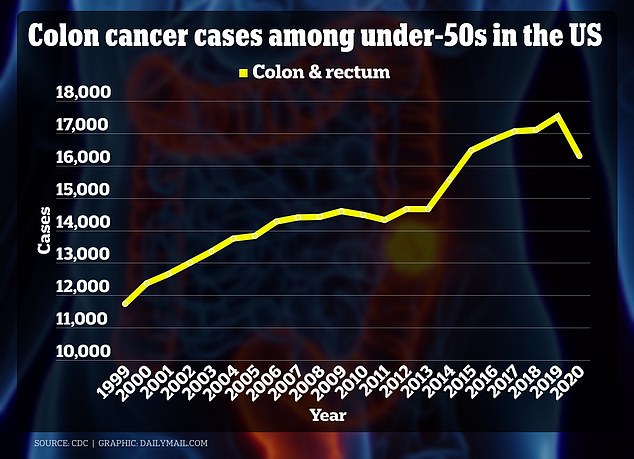
Rates of GI cancers rose most sharply in the youngest age group, followed by the 20-29 year old cohort. There were also more cases of GI cancers among older people, though in that case it is still considered early-onset cancer
This new alarming cohort don’t have cancer in the family, don’t smoke and drink less than previous generations.
Dr Ng said: ‘Why are these otherwise healthy young people in the prime of their lives developing cancer and often very advanced stages of cancer?’
Among children ages 10 to 14 in America since 2000, colorectal cancers have increased 500 percent and among teens aged 15 to 19 the rise was 333 percent, even though the overall numbers of cases are still relatively low in these groups.
Dr Ng said that until doctors know more, patients under 50 must be vigilant for alarming symptoms of the cancer.
The main three signs that appear years before a diagnosis are: blood in stool, changes in bowel movements, and stomach pains.
She added that fatigue and unexplained weight loss are also highly suggestive.
Junk food, plastic pollution and the over-use of antibiotics are some of the factors theorized to be behind the rise in early onset cancers, but the evidence is inconclusive.
At the Young Onset Colorectal Cancer Center at Dana-Farber Cancer Institute in Boston, Dr Ng is exploring how dozens of factors, including diet, sleep, supplementation and drinking habits are playing a role in this increase.
‘I see patients one day a week and the rest of my time is spent running the [new center], which really focuses on young people under the age of 50 who are diagnosed with colorectal cancer, as well as conducting research on the diet and lifestyle factors that may impact how long a patient lives with colorectal cancer.’
In her work, she has also discovered that vitamin D levels may play a role in cancer development.
Her research showed that higher levels of it in the blood was associated with longer survival in people with CRC cancer, especially in stages three and four, which suggests the vitamin plays a protective role.
But how that factors into the rise in young people is still a mystery.
So too is the apparent link between breastfeeding and colon cancer.
One 2023 study found that having been breastfed as an infant was associated with a 23 percent increased risk of colorectal cancer later in life, and Dr Ng said this corresponded with findings from other studies she’s reviewed.
But Dr Ng said this is no reason to stop breastfeeding your baby.
‘We did see an association between women who reported that they were breastfed as an infant in developing polyps [in their colon], including high risk polyps before they were age 50,’ she said.
About The Author