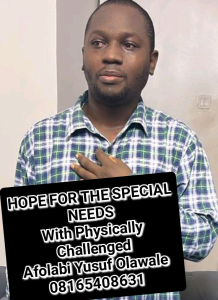
“It is imperative that we break the silence and condemn the use of ableist language. We must recognize that words have power, and that using language that dehumanizes and diminishes others is simply unacceptable.“
By Afolabi Yusuf Olawale
A spoken word is like a stone. Once cast, it cannot be retrieved. Its impact, whether intended or not, ripples outward, leaving an indelible mark on the landscape of human interaction. This truth holds particular weight when it comes to the words we use to describe and address individuals living with disabilities.
In Nigeria, the blind community, and indeed all individuals navigating the landscape of disability, are often subjected to a barrage of derogatory and discriminatory language. These words, like carelessly thrown stones, leave scars on the psyche, perpetuating harmful stereotypes and creating a culture of exclusion and disrespect.
The insidious nature of ableist language lies in its seeming normalcy. It has become so ingrained in our everyday vocabulary that we often fail to recognize its harmful impact. Terms like “cripple,” “lame,” “lunatic,” “retarded,” and “handicapped” are casually tossed about, their dehumanizing power often overlooked. In Yoruba, the word “Afoju” is frequently used as a derogatory term for blind individuals, further highlighting the pervasiveness of this harmful language.
We forget that behind these words are real people, with feelings, dreams, and aspirations. These words, like stones cast into a pond, create ripples of prejudice and discrimination. They shape the way we perceive and treat individuals with disabilities, often resulting in social isolation, limited opportunities, and a persistent sense of being less than. They chip away at the self-esteem of those they target, fostering a culture of shame and self-doubt.
It is imperative that we break the silence and condemn the use of ableist language. We must recognize that words have power, and that using language that dehumanizes and diminishes others is simply unacceptable.
Here’s what we can do:
- Be mindful of our language: Before uttering a word, take a moment to consider its potential impact. Are we using language that is respectful and inclusive?
- Challenge the use of ableist language: When we hear someone using derogatory terms like “Afoju” or “handicapped,” let’s speak up. Explain why such language is harmful and unacceptable.
- Promote positive language: Let’s use language that emphasizes the abilities and strengths of individuals, rather than focusing on their limitations.
The fight against ableism transcends merely changing words; it is about transforming hearts and minds. It is about fostering a society where every individual is treated with respect and dignity, irrespective of their abilities. Let us pledge to use language that embodies this commitment—language that builds bridges instead of walls, that offers flowers instead of stones.
The words we choose have the power to heal or to harm. Let us select words that reflect compassion, understanding, and a dedication to inclusivity. Let us endeavor to create a world where every person, regardless of their abilities, feels seen, valued, and respected.
About The Author