Feature News by Olawale Lamina, Editor-in-Chief
Following a slight but gradual rebound of the Naira to the United States Dollars (USD) exchange, some Nigerians have opined that the price of the cooking gas, also known as LPG may gradually reduced to appreciable level, especially if the foreign exchange continues to favour’ the local currency, this much was supported as the Federal Government stated that efforts are in place to see to a reduction in the price of the product, contrary to the stand by the local marketers that even if government boosts the local production of the LPG, it may not result in bringing down the cost as gas is priced in foreign currency.
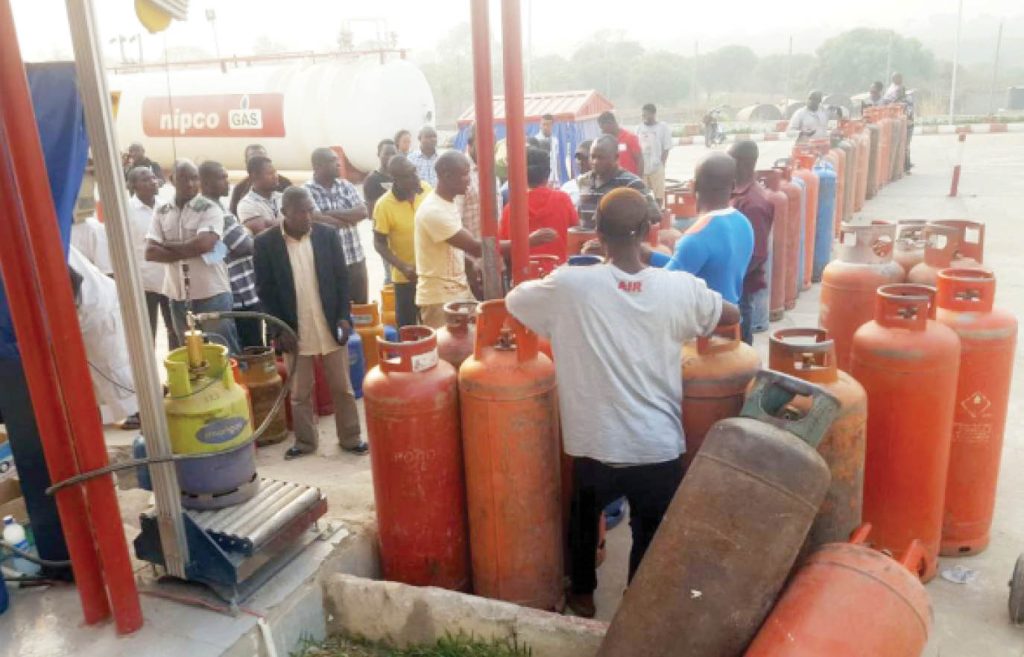
Some analysts have observed that the likely fall in the price of LPG may be closely associated with the rebound of the naira in the month of April from about N1,900 per dollar to about N1,500 again at the moment.
But, just as the Federal Government has expressed the hope that with more efforts, the price of LPG could be jerked down, operators in the industry have expressed the fears that the price may even increase.
In a survey by our correspondent, the price of the cooking gas currently vary slightly from one location to the other, amidst a general drop from the previous cost of the product. For instance, one kilogramme (kg) of the cooking gas stands between N940 and N1,000, even up to N1,050 in some gas plants across the states. This is against the previous higher cost which stood at N1,300 per kg.
But, additional reports by The Pinnacle Times revealed the prices of the product are different too depending on different vendors and operators.
In Kwara State, it was gathered that the product sold for N1,200 in Ofa, the state capital,while it used to be N1,400 weeks ago over there.
In Ogun State, the price of cooking gas currently stands at N800/kg, against N1,200 in April, 2024. On the reverse side of this, the LPG price at the Federal Capital Territory, FCT, currently stands at N1,200 per kg, as against N1, 400 and more in the past.
On the likely factors that were responsible for the reduction in the cost,( though at fluctuating levels), the Minister of Petroleum Resources ,Gas, Ekperikpe Ekpo, had earlier stated through his Media Assistant, Luis Ibah, that reduction in the price of LPG was not unconnected with efforts being made by the Federal Government, through the Ministry of Petroleum Resources (Gas) with the full support of relevant regulatory agencies in the sector and even operators to increase the volume of domestically produced cooking gas coming into the local market.
The Minister noted again that, the domestication of LPG export led to reduction in the dependence on imported LPG, which influenced its attendant added costs due to instead FOREX performance .

Minister of Petroleum Resources ,Gas, Ekperikpe Ekpo
Also, he noted that the impact of the government waiving Value Added Tax and customs duties on gas and its equipment must have contributed to the price reduction being witnessed.
The Minister left more assurances of the likely reduction in the cost of LPG in months ahead, even as more volumes of LPG domestically produced is released into the domestic market.
On the contrary to the assurances of possible reduction in cost of purchasing the LPG across the country, the Nigerian Association of Liquefied Petroleum Gas Marketers on their part expressed concerns that the price of LPG may leap forward in the coming weeks.
The Executive Secretary of NALPGAM, Bassey Essien, stated while reacting to the trend that the reduction occasioned by the naira rebound was being eroded because gas is priced in dollars.
He argued that if the Federal Government boosts local production of LPG, the price will not be stable still because gas producers sell in foreign currency.
Essien was quoted as saying that, ” I won’t say it has come down, because it is going up again. And it is an interplay of the foreign exchange. Everything is priced in foreign exchange, very soon even the air we breathe will be priced in foreign exchange.
“Even the LNG that is a domestic gas, how do they price it? It is still being priced at the international price, and the international price is dependent on the dollar.
“Whether you have it in abundance or not, it is still being sold at the international price. The bottom line is everything is priced in forex,” Essien said, asking the government to look into local pricing of gas.
In the midst of the positions being presented, an average Nigerian still grapples with high cost of living caused by inflationary trends in the country. The cost of house rent, transportation, electricity and water bills and even gas prices have made the life generally difficult for many.
About The Author